
Asylum Appeal Interpreter Services for UK Legal Teams
Help an appellant communicate clearly during a solicitor meeting, witness interview or appeal-preparation appointment. We review the spoken language, dialect and role before arranging suitable interpreting support.
- Solicitor consultations and statement instructions
- Sensitive case preparation and witness review
- Language and dialect matching
- Video or in-person formats where appropriate
Different stages of an asylum appeal need different interpreting
An asylum appeal interpreter supports spoken communication between a person involved in an appeal and the authorised professional taking instructions. The task may involve reconstructing a chronology, clarifying a statement, discussing evidence or understanding questions. The interpreter must convey meaning faithfully and avoid supplying legal advice or inventing details.
A meeting with the appellant’s solicitor is different from live interpreting at a Tribunal hearing. The legal team must check who is authorised to arrange an interpreter for each stage. For witness statements prepared in English that the witness does not understand, there may also be a separate read-back and attestation requirement.
Where this service supports legal preparation
The correct interpreting task depends on the status of the evidence, the intended audience and who is responsible for the document.
Initial instructions
Help a solicitor understand the appellant’s account, including chronology, places, dates and uncertainty, without directing what the witness should say.
Witness statement preparation
Support questions and answers as a draft statement is prepared. The solicitor controls wording, relevance and amendments.
Read-back of an English draft
When needed, interpret the final statement aloud in a language the witness understands, giving an opportunity to identify inaccuracies before signing.
Appeal-hearing language support
Hearing arrangements must be checked with the Tribunal. A privately instructed preparation interpreter is not automatically the hearing interpreter.
A careful process for asylum case preparation
A clear brief and carefully coordinated review are more valuable than assuming one interpreting format fits every case.
Define the appointment
The solicitor confirms whether this is a conference, instructions interview, statement review or another authorised meeting.
Check the language
Specify the language and dialect, whether the witness can read English, and any communication or access considerations.
Prepare securely
Agree who may attend, how documents will be shared, and whether there is sensitive evidence requiring additional care.
Review and follow up
Allow the person to identify corrections. The legal representative records them and decides on any further read-back or filing steps.
Witness accounts: accuracy without embellishment
Legal evidence can depend on precise details: the difference between seeing an event and hearing about it, an approximate versus exact date, or a translation that makes uncertainty sound definite. The interpreter should faithfully relay how the witness expresses those distinctions, including pauses and clarification questions when material.
If the witness gives a different answer to a drafted statement, the interpreter communicates the difference rather than quietly adjusting the English. The solicitor decides how to record the amended evidence. For important dates, names and place names, allow time to check the intended meaning and transliteration.
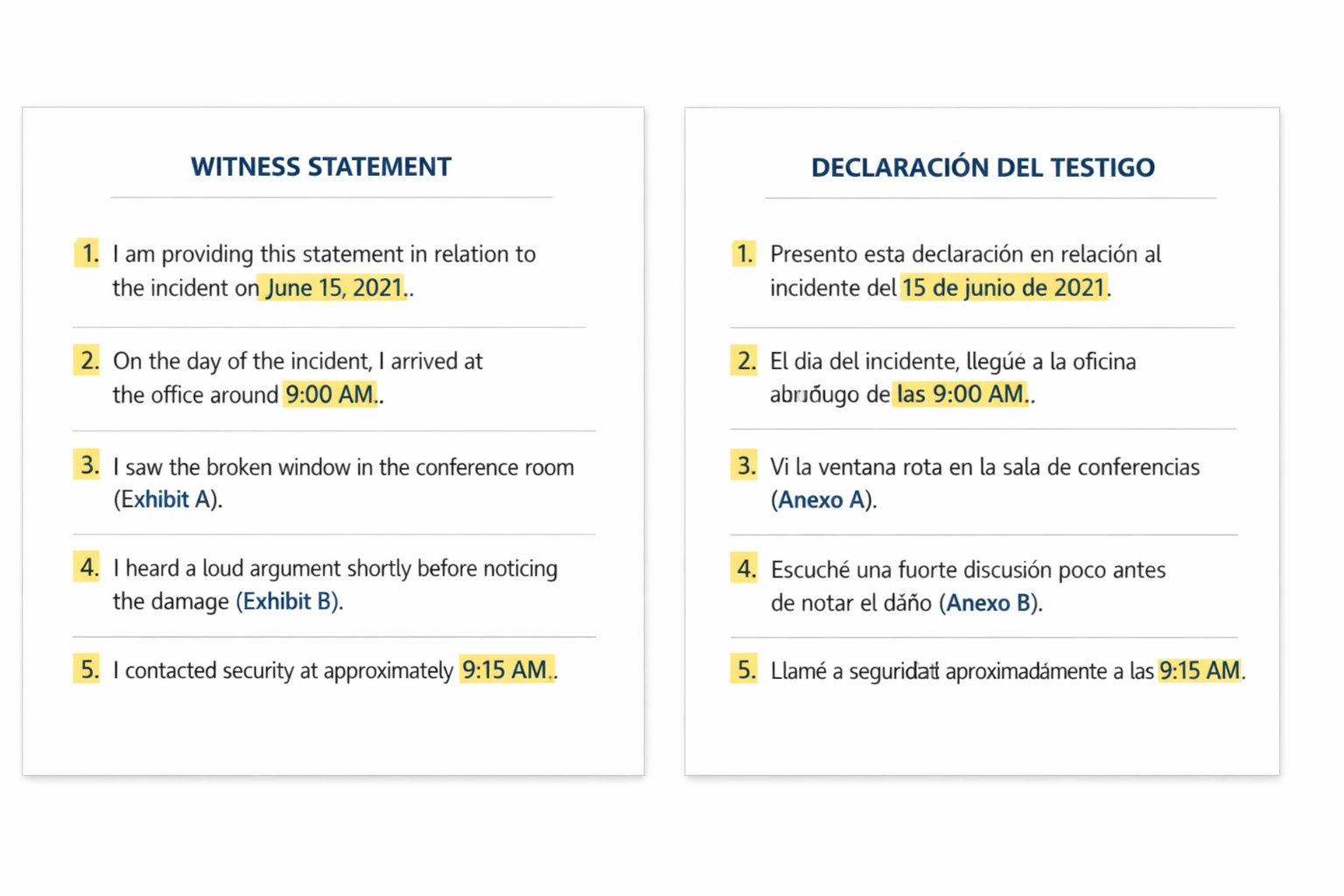
Asylum interpreter or witness statement read-back?
Asylum interpreting is the broader category covering oral communication for legal preparation. A witness statement read-back interpreter has a more specific task: conveying an identified English draft aloud so the witness can verify their account.
Where the First-tier Tribunal Immigration and Asylum Chamber Practice Direction applies, an English statement not understood by the witness can require signed and dated read-back attestations. See Paragraph 8.5 interpreter guidance and the official Practice Direction. The legal representative should check current directions before filing.
What to confirm about each assignment
Clarify the intended purpose before scheduling the interpreter.
| Stage or service | What needs confirming |
|---|---|
| Solicitor meeting | Who is present, the matters to discuss, confidentiality and language or dialect requirements |
| Statement read-back | The final approved English statement, page numbering and any attestation instructions |
| Tribunal hearing | Who supplies the hearing interpreter and which official hearing arrangements apply |
Key questions about this interpreting service
These details help the legal team identify the correct appointment and procedural requirements.
Interpreting Witness Statements for Asylum Appeals
An asylum appellant’s account may be taken through an interpreter before the legal representative prepares an English witness statement. The interpreter should communicate the witness’s own words, including uncertainty about dates or details. The solicitor remains responsible for drafting, checking and deciding what evidence is relevant to the appeal.
Supporting Solicitors with Asylum Witness Statement Preparation
Before the appointment, provide the spoken language, dialect, meeting format and relevant case stage. The solicitor should direct questions and address differences between the client’s instructions and the draft statement. Where necessary, the interpreter can assist with explaining terminology without changing the substance of the evidence.
Interpreter Declarations for First-tier Tribunal Appeals
For applicable First-tier Tribunal Immigration and Asylum Chamber cases, an English statement that the witness does not understand may need to be read back in an understood language with signed and dated confirmations. The legal representative should check paragraphs 8.5 and 8.12 of the current Practice Direction and any case-specific order.
Book an Interpreter for an Asylum Appeal
Specify whether the appointment concerns solicitor instructions, a witness statement read-back or another stage of the appeal. Confirm the requested language, regional dialect, date, duration and meeting venue or video platform. Hearing interpretation is a separate arrangement that should be checked with the Tribunal.
Asylum Appeal Interpreter Services UK FAQs
These answers explain practical arrangements, not legal advice. Applicable rules and case-specific directions take precedence.
Related legal language services
Can you help with witness statement instructions for an asylum appeal?
A solicitor may instruct an interpreter for suitable case-preparation meetings. Share the language, stage of the case, format and intended date so the assignment can be assessed.
Is the interpreter responsible for drafting my statement?
No. The interpreter conveys what participants say. The legal representative drafts and checks written evidence.
Can the same interpreter attend an appeal hearing?
That cannot be assumed. Check interpreter arrangements and any permissions with the Tribunal or legal representative.
What if an asylum witness does not read English?
A prepared English statement may need an oral read-back in the witness’s language, with applicable attestations checked by the legal team.
Do you support remote solicitor meetings?
Video can be considered where the organiser approves the format and appropriate privacy, sound and document access are available.
What information is needed before booking?
Provide the language and dialect, purpose, anticipated duration, proposed date, venue or video platform, and any accessibility needs.
Discuss the interpreter requirements for your case
Send the spoken language and dialect, reason for the appointment, proposed date and format, and any instructions from the solicitor or Tribunal. Agree a secure route before sharing sensitive witness evidence.