

If you’re applying for British citizenship, the paperwork is often straightforward — until one document isn’t in English. That’s where british citizenship document translation becomes essential. A missing or non-compliant translation can trigger requests for more information, slow your case, or force you to re-submit documents under pressure.
This guide shows you exactly when translations are needed, what “certified” means in practice, and how to get the right format first time — whether you’re preparing naturalisation document translation for your application, or organising UK passport pathway docs after you’re approved.
The quick rule: when translation is required
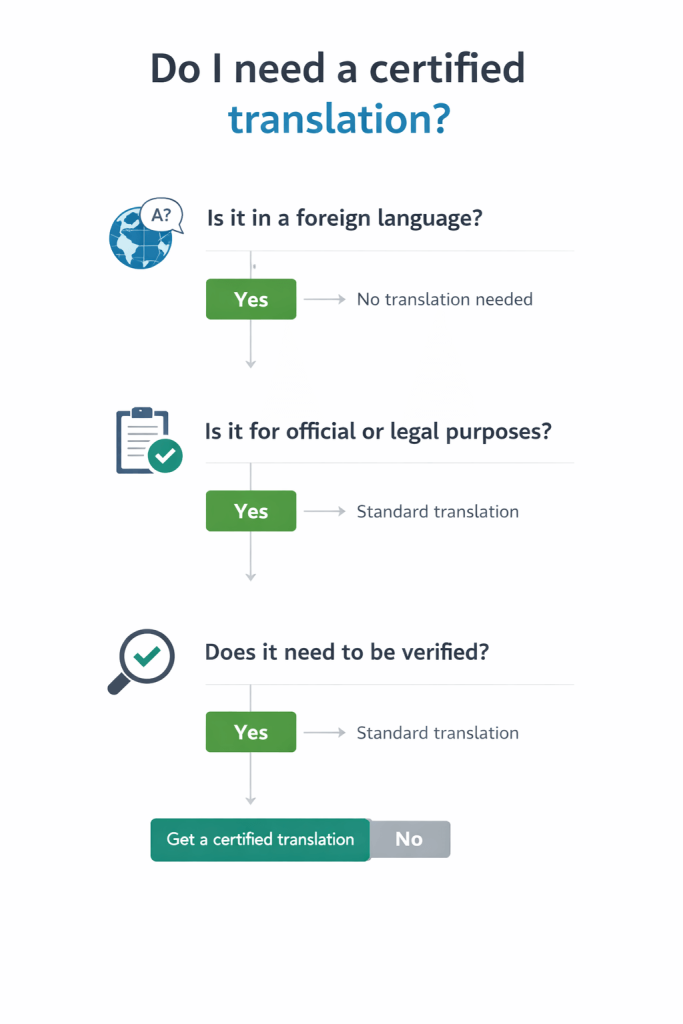
You typically need a certified translation when:
- You’re submitting a document that is not in English (or Welsh) and you want the Home Office to rely on it.
- The document includes stamps, handwritten notes, marginal notes, or official remarks that affect meaning.
- Your supporting evidence includes names, dates, places, or legal status details that must match your application.
A 60-second self-check before you upload anything
Ask yourself:
- Does this document support identity, status, residence, relationship, or good character?
- Is any part of it in a language other than English (or Welsh)?
- Would a caseworker be able to verify key details without guessing?
If you answered “yes” to 1 and 2, get it translated and certified properly.
Where translations commonly appear in citizenship applications
Most applicants don’t need to translate everything — only what they’re relying on. In practice, translations usually come up in four parts of the journey:
1) Before you submit your application (most common)
This is where naturalisation document translation matters most — you’re gathering supporting documents and uploading scans.
2) During checks / requests for more information
If anything is unclear (names, dates, civil status), a translation request can arrive later — and deadlines can be tight.
3) At ceremony stage (rare, but possible)
Most people won’t need fresh translations here, but you may need to present originals depending on your situation.
4) After approval: UK passport pathway docs
Once you have British citizenship, the next step is often a passport application. If you plan to use foreign civil documents (for example, a foreign birth certificate or marriage certificate), certified translations can be needed again.
Which documents typically need certified translation for British citizenship?
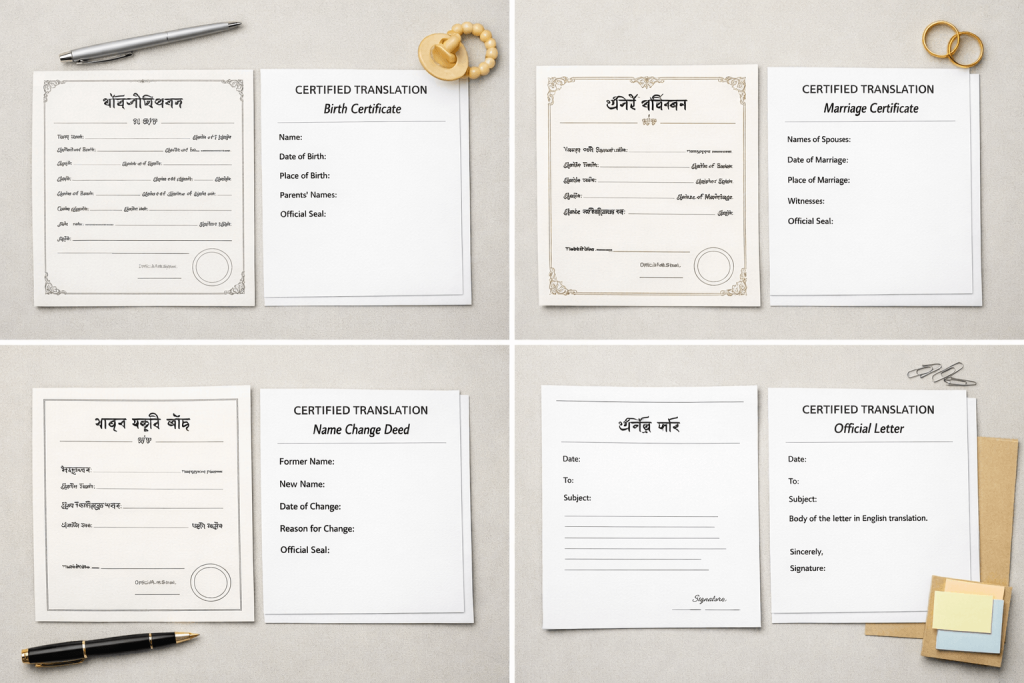
Below is a practical, real-world breakdown of what people most often translate for citizenship applications.
Identity and civil status documents
You may need certified translations for:
- Birth certificates (yours and/or your child’s)
- Marriage certificates / civil partnership certificates
- Divorce decrees / dissolution documents
- Change of name documents (deed poll, court order, gazette notice)
- Adoption papers or parental responsibility documents (where relevant)
Common pitfall: names may appear differently across documents due to accents, transliteration, or naming order. A professional translator can add a short translator note (without changing meaning) to clarify consistency.
Immigration and status evidence
Depending on your route, you may be relying on:
- Residence permits or status letters
- Registration documents
- Official letters confirming status or decisions
If any are not in English (or Welsh), translate them.
Proof of residence and life in the UK (only when you rely on it)
Not everyone submits the same evidence here. If you do submit items not in English, these often need translating:
- Tenancy agreements
- Employer letters
- Bank letters
- Tax or social security letters
- School letters (for child registration cases)
Tip: Don’t translate pages you are not submitting. Translate only the pages you rely on.
Good character and legal history documents (only if used)
If you provide overseas police certificates, court records, or legal correspondence in another language, these typically need certified translation.
Important: If you’re unsure whether a document is necessary at all, clarify what you need to submit first — then translate what you will actually rely on.
What “certified translation” should include (the practical standard)
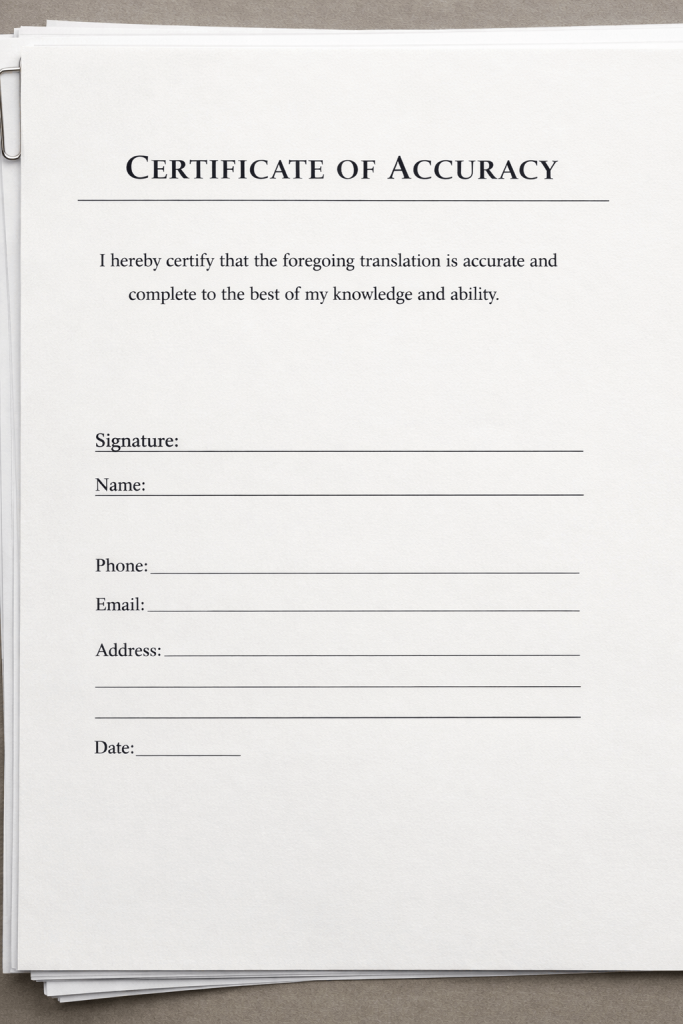
A certified translation is not just a translated page. It’s a verifiable translation that includes a signed certification statement from the translator or translation company.
A robust certification page typically includes:
- A statement confirming it is a true and accurate translation of the original
- The date of translation
- The full name of the translator or an authorised representative of the translation company
- Contact details (so it can be checked if needed)
- A signature and (optionally) a stamp for clarity
Copy-and-paste certification wording you can use as a reference
I confirm that this is a true and accurate translation of the original document presented to me.
Translator / Company name: [Name]
Date: [DD Month YYYY]
Contact details: [Email, phone, address]
Signature: ____________
A professional certified translation provider will format this cleanly and attach it to the translation so it’s ready to upload or print.
Do you need notarisation or apostille as well?
In most British citizenship applications, certified translation is the key requirement — not notarisation.
You may consider notarisation only if:
- A specific authority explicitly requests it, or
- You’re using the translation for a separate legal process (for example, certain court or overseas consular matters)
Apostille is a different process again: it relates to legalising documents for use abroad, not making a translation “more valid” for UK citizenship.
If you’re juggling both citizenship and overseas use, it’s worth choosing one provider who can advise on the correct order (and prevent you from paying twice for avoidable steps).
The most common reasons applications get delayed because of translations
These are the problems we see most often when applicants are asked to re-submit:
- Partial translation (only translating the “main text” but skipping stamps, handwritten notes, back pages, or remarks)
- Missing certification details (no date, no contact details, no clear statement of accuracy)
- Unclear scans (low-resolution photos, cut-off corners, glare, missing pages)
- Name inconsistencies (different spellings across documents with no explanation)
- Formatting confusion (date formats, place names, titles — especially when the original uses local conventions)
A simple “upload-ready” checklist
Before you submit your documents:
- Scan in good light; ensure corners and stamps are visible
- Include all pages that belong to the document (front/back where relevant)
- Confirm names and dates match your application spelling
- Use one consistent naming system for files (e.g., “BirthCertificate_Applicant_Name.pdf”)
Timing: how to get translations without slowing your application
If you’re working to a deadline, plan backwards:
- Standard service works well when you’re still gathering documents.
- Same-week service is ideal when you’re close to submission or responding to follow-up requests.
- Urgent options are best reserved for small, high-stakes items (single certificates, letters, short legal documents).
What affects speed the most:
- Document length and handwriting
- Whether formatting must be preserved carefully
- Whether names require consistent transliteration across multiple documents
- Whether you need both digital and posted hard copies
How to get an online quote without back-and-forth
A fast online quote is easiest when you send four details upfront:
- Your document(s) (clear scan/photo)
- Source language and target language
- Purpose: “British citizenship application / naturalisation”
- Deadline (including whether you need same-week delivery)
Once you approve the quote, your provider can translate, certify, and deliver a ready-to-upload PDF — with hard copies available if needed.
If you’d like it handled end-to-end, upload your files and request a quote with your deadline. You’ll get a clear price and turnaround, and your certification will be prepared in a format designed for official submissions.
Real-world examples (what applicants commonly translate)
Example 1: Marriage certificate used to support a citizenship route
A marriage certificate issued overseas (not in English) is translated and certified. Names are matched to passport spelling, and the translator includes a short note clarifying naming order.
Example 2: Birth certificate with stamps and handwritten entries
The translation includes every stamp and annotation, not just the printed lines — so nothing important is missed.
Example 3: UK passport pathway docs after citizenship
After naturalisation, the applicant applies for a passport and needs a transcribelingo.com/certified-translation-servicesied translation of a foreign birth certificate used as supporting evidence.
FAQs
Do I need british citizenship document translation for every foreign document?
Only for documents you are relying on and submitting that are not in English (or Welsh). Translate what supports your case.
Can I translate my own documents for a British citizenship application?
It’s strongly discouraged. A translation must be independently verifiable and include proper certification details from a translator or translation company.
What is naturalisation document translation, exactly?
It’s certified translation prepared specifically for a naturalisation application (supporting documents like certificates, legal records, and official letters).
Do UK passport pathway docs require certified translation too?
Sometimes. If you submit non-English (or non-Welsh) supporting documents with a passport application, certified translations may be needed.
Do I need notarisation for citizenship translations?
Usually no. Notarisation is typically only required when a specific authority requests it for a separate legal purpose.
How fast can I get a same-week service translation?
Same-week service is often achievable for standard certificates and short documents, depending on language pair and document quality.
