If you’re searching for how to become a certified legal translator, you’re probably aiming for higher-trust work: court bundles, contracts, immigration paperwork, police records, medical reports, clinical documents, and anything that must be accurate, verifiable, and professionally presented.
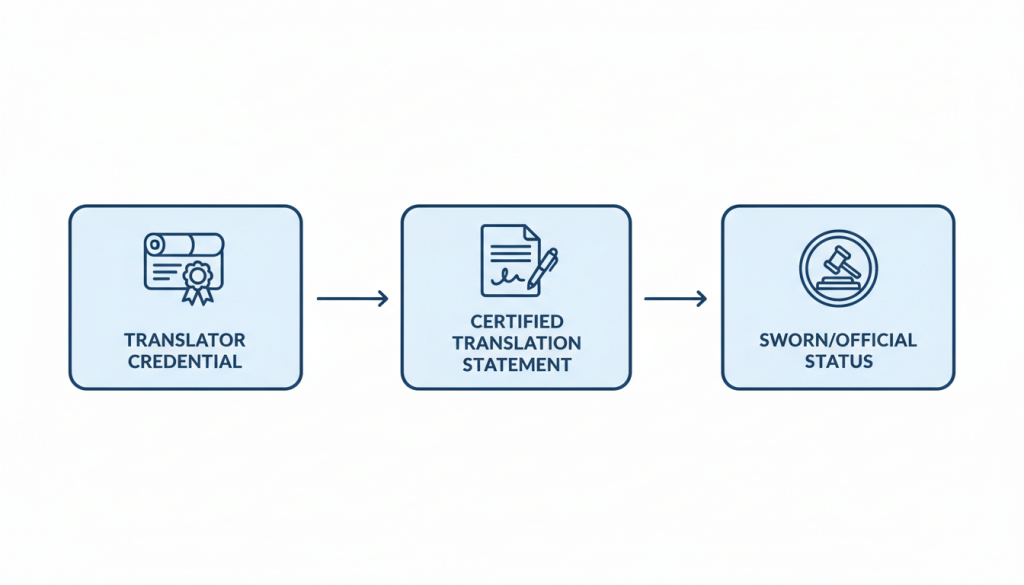
Here’s the reality: “certified” can mean different things depending on the country, the client, and the receiving authority. Some places certify the translator (a credential). Others care about certifying the translation (a signed statement of accuracy). In some jurisdictions, you may need to be sworn/officially appointed to translate documents for courts or public bodies.
This guide gives you a practical route for both legal and medical specialisms—plus the exact portfolio pieces, quality checks, and credibility signals that help you win serious work.
What “certified” means (and why people get this wrong)
Before you spend money on courses or exams, be clear about which “certified” you actually need:
1) Certified translator (you hold a credential)
This is when a recognised body awards you a credential after meeting requirements (exam, experience, membership route, etc.). Examples include association certifications and professional qualifications.
2) Certified translation (your work includes a certificate statement)
This is common for immigration, universities, banks, courts, and HR. The translation is accompanied by a signed statement confirming it’s a true and accurate translation, with date and contact details.
3) Sworn / official / court-appointed translator (legal status)
In some countries, “sworn” translators are officially authorised and may stamp/sign in a specific way for official use. If your goal is public-sector legal work in those jurisdictions, this status matters.
Key takeaway: you can be an excellent legal translator and still be “not certified” in one jurisdiction—while being “certified” (by credential or by translation statement) in another. Your plan must match the end-use.
The fastest path that works for both legal and medical translation
Legal and medical are different worlds, but the career build is surprisingly similar. Use this as your backbone:
Step 1: Choose a profitable, realistic language direction
Most professionals translate into their strongest writing language. High-stakes sectors punish awkward phrasing, ambiguity, and register mistakes.
Pick:
Your primary language pair
Your direction (e.g., Spanish → English)
Your niche lane (legal documents, litigation support, immigration, healthcare records, pharma/regulatory, etc.)
Step 2: Build professional translation fundamentals
Before specialising, you need three non-negotiables:
Excellent writing in the target language (legal/medical register included)
Research discipline (finding reliable equivalents, not guessing)
Step 6: Implement a quality workflow (your future self will thank you)
High-stakes translation is won on process:
glossary + style rules
second-person review (or structured self-review)
numeric and formatting verification
final delivery check (PDF layout, naming, certificate statement, etc.)
Step 7: Start with the right clients (and the right offer)
Legal and medical clients buy reliability. Position your offer around:
accuracy and verifiability
secure handling
predictable turnaround
clear formatting and submission readiness
If you’re already translating documents for official use, Transcribe Lingo can support you with translation services and a process aligned to real-world acceptance needs. For documents requiring a certificate statement, see certified translation services.
How to become a certified legal translator
Legal translation is one of the highest-trust niches in language services because mistakes can change obligations, rights, or outcomes. Your job is to produce a text that is accurate, defensible, and professionally formatted—often under pressure.
The legal specialisms that pay (and what they actually involve)
Core document work (high volume):
contracts, terms, NDAs
company documents (Articles, filings, board resolutions)
immigration and civil documents (certificates, court orders)
immigration/civil document excerpt + certificate statement example
Ask a qualified reviewer (or a senior translator) for feedback on at least one sample
Choose your credential path (association diploma/certification vs sworn route vs market-driven approach)
Draft a professional “submission-ready” delivery format (PDF + certificate statement + naming convention)
Legal translation quality checklist (copy/paste and use)
Accuracy & meaning
All defined terms tracked and consistent
No added/removed legal meaning
Ambiguities flagged with translator’s notes (when appropriate)
Names, dates, numbers
Names match source exactly (including diacritics rules you’ve chosen)
Dates converted correctly (and consistently)
Numbers, amounts, references, case numbers checked visually
Formatting
Clause numbering preserved
Headings and indentation preserved
Stamps/seals/signatures accounted for (translated/marked as applicable)
Delivery
File naming clear and professional
Certificate statement included when needed
Final PDF looks like a document a solicitor/court can actually use
How to become a certified medical translator (and how it differs from medical interpreting)
Many people searching how to become a certified medical translator get pulled into interpreter certifications by mistake. Interpreting credentials can be excellent—but medical translation is its own lane.
Medical translation focuses on written materials such as:
patient records and discharge summaries
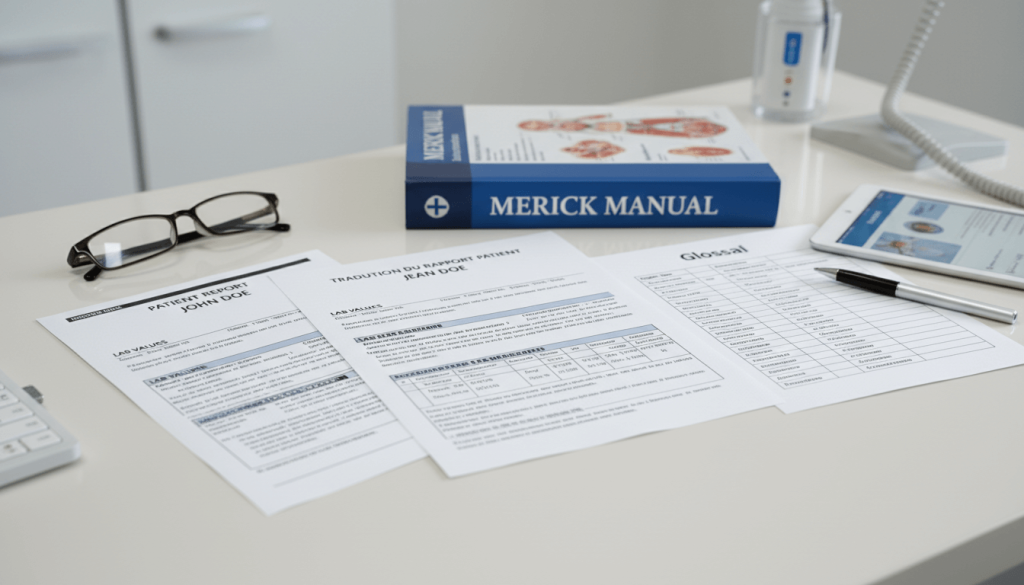
medical reports and lab results
clinical trial documents (protocols, ICFs)
instructions for use (IFUs) and device materials
patient information leaflets and regulated packaging content
What medical translation “tests” in the real world
Terminology discipline: correct terms, correct context, no invention
Units and dosage: decimals, spacing, measurement units, ranges—checked twice
Abbreviations: expanded or preserved appropriately (and consistently)
Audience control: clinician-facing vs patient-facing language
Regulatory sensitivity: consistent wording across versions; no “creative” rewriting
Data handling: privacy and secure workflow are not optional
If your clients include organisations producing regulated materials, your work must align with strict document control habits: versioning, tracked changes, consistent terminology, and review steps.
A practical 90-day plan for medical translation
Create a terminology bank focused on your target document types
Learn common abbreviations and “false friends” in your language pair
Choose one lane: healthcare records OR pharma/regulatory OR devices/IFU
Translate 8–10 short texts (redacted samples are fine)
Run a “numbers-only pass” (dosage, lab values, dates, ages, ranges)
Create a style rule set (decimal separators, units, Latin terms, headings)
Pack A: medical report excerpt + terminology notes
Pack C: IFU excerpt + formatting and warnings consistency check
Choose your credential path (see the next section)
Prepare a compliance-ready delivery method: secure handling, clear version control, and a documented QA routine
Medical translation quality checklist (copy/paste and use)
Safety-critical checks
Dosage, frequency, route of administration verified
Units consistent (mg/mL vs mg per ml; spacing and decimals consistent)
Warnings/contraindications preserved without softening/strengthening meaning
Clarity checks (patient-facing)
Terms adapted to plain language without changing intent
Lists and instructions readable and logically ordered
No ambiguous pronouns (“it/they”) that could mislead a patient
Consistency checks (regulated content)
Repeated phrases identical across the document
Terminology aligns to your glossary and client style
Versioning and file naming unambiguous
Picking the “certification” route that actually helps your career
Below is a practical way to decide where to invest. The best choice depends on your country, your target clients, and whether you need legal status (sworn/official).
Goal
What clients want
Best “certification” move
Immigration/civil documents
Submission-ready translations with a certificate statement
Domain training + documented QA + credibility through samples
Pharma/regulatory
Process discipline + consistency + review steps
Regulatory-focused training + robust workflow + reviewer network
If your work involves documents that must be accepted first time, it’s worth understanding how certified translations are typically presented and what gets rejected. The certified translation services guide is a useful reference point for formatting and acceptance expectations.
The certificate statement you’ll need for certified document translations (templates)
Always follow the receiving authority’s instructions. When a certificate statement is required, keep it clear and verifiable.
General certificate statement (safe, widely accepted format)
Certificate of Accuracy I, [Full Name], certify that I am fluent in [Source Language] and English, and that the attached translation is a true and accurate translation of the original document to the best of my knowledge and ability. Name: Signature: Date: Contact details: (email, phone, address or company details)
When you should add translator’s notes
Use translator’s notes sparingly and only for clarity, such as:
illegible handwriting
unclear stamps
abbreviations in the source
missing pages or partial scans
Portfolio: what to show so legal and medical clients trust you
A strong portfolio is not “lots of samples”. It’s three well-chosen proof points:
Numbers copied incorrectly (decimal separators, unit conversions)
Stamps/seals ignored
Overconfident rewriting of legal meaning (“improving” the text)
Using inconsistent terminology across repeated clauses or warnings
Delivering in an unreadable format (messy layout, broken tables, unclear headings)
Where Transcribe Lingo fits (if you want professional backup or a submission-ready result)
If you’re building your path into legal or medical specialisms, there are times you need a reliable partner—especially for certified documents, tight deadlines, or sensitive files.
When you’re ready, upload your document and request a quote via Contact Us—you’ll get a clear turnaround and the right certification format for your use-case.
“Fast turnaround, clear communication, and accepted by our lender.” “University admissions approved it without queries.”
FAQs
How do I become a certified legal translator without a law degree?
You don’t need a law degree, but you do need legal literacy: document structures, legal register, research discipline, and consistency with defined terms. Build a legal portfolio, add a recognised credential route where relevant, and adopt a strict QA workflow.
How long does it take to become a certified legal translator?
If you already translate professionally, you can build a legal-ready portfolio in 8–12 weeks. Earning a major credential may take longer depending on exam schedules and requirements, but you can still begin with supervised, lower-risk legal document types while you train.
How to become a certified medical translator if I don’t have a healthcare background?
Start with one lane (records, devices, or regulatory), build terminology discipline, and practise accuracy checks (numbers/units/abbreviations). Many successful medical translators come from language backgrounds and specialise through structured study and consistent practice.
How to get certified as a medical translator (what qualification is best)?
There isn’t one universal global medical translator certification. The best move is a recognised translation credential plus medical-focused training and a portfolio that proves you can handle safety-critical content and regulated phrasing.
What should a certified translation include for official submission?
Usually: a signed certificate statement confirming accuracy, the date, the translator’s full name and signature, and contact details. Some authorities also expect formatting that mirrors the original and clear handling of stamps/seals.
Is “sworn translator” the same as “certified translator”?
Not always. “Sworn” is a legal status in certain countries. “Certified” may refer to a credential, or simply a certified translation statement attached to your work. Always match the requirement to the country and receiving body.
Transcribe Lingo is your preferred language services provider offering fully managed translation, transcription and interpreting services in multiple languages.
Subscribe to our News Letter
Join our newsletter to get updates on transcription tips, language industry insights, exclusive offers, and new service releases—straight to your inbox.
Understanding E-Learning Companies and Their Global Reach E-learning companies are organizations that provide educational content and training through digital platforms. These companies utilize technology to deliver courses, training modules, and learning materials to...
Understanding Healthcare Translation and Interpreting Healthcare translation and interpreting encompass the processes of converting medical documents and facilitating communication between healthcare providers and patients who speak different languages. This field is...
Understanding Legal Translation Services Legal translation services are specialized linguistic services that focus on translating legal documents and texts from one language to another. This includes a wide range of materials such as contracts, court documents, legal...
Understanding Market Research Transcription Market research transcription refers to the process of converting audio or video recordings from market research activities, such as interviews, focus groups, and surveys, into written text. This transcription is crucial as...
Understanding Post-Brexit Translation Requirements The landscape of translation services in the UK has undergone significant changes following Brexit. The departure from the European Union has introduced new translation regulations that businesses must navigate to...
Understanding E-Learning Localization E-learning localization refers to the process of adapting online educational content to meet the linguistic, cultural, and contextual needs of specific target audiences. This involves not just translating the text but also...
Understanding the Importance of App Translation App translation is not merely a luxury; it's a necessity for businesses aiming to expand their reach in today's global market. With more than 3 billion smartphone users worldwide, the potential audience for your app is...
Understanding Website Translation Website translation is the process of converting the content of a website from one language to another while ensuring that the message, tone, and context remain intact. This process goes beyond mere word-for-word translation; it...
Understanding the Importance of Subtitles Subtitles are more than just text on a screen; they play a crucial role in enhancing the accessibility and engagement of video content. By providing a written representation of spoken dialogue, subtitles make videos accessible...
Understanding BSL Interpretation in Healthcare BSL interpretation refers to the process of translating spoken language into British Sign Language (BSL), which is a visual language used predominantly by the Deaf community in the UK. This interpretation is crucial in...