

Becoming a certified translator in the UK is not about a single licence or exam. Instead, it’s about building recognised qualifications, professional credibility, and evidence of competence that clients, agencies, and authorities trust.
If you are researching how to become a certified translator in the UK, this guide walks you through every realistic route — from education and professional recognition to specialisation, certification practices, and how translators actually work in the UK market.
What “Certified Translator” Means in the UK
Unlike some countries, the UK does not issue a government licence titled “Certified Translator”. Certification is context-based, not a protected job title.
In practice, a translator is considered “certified” when they:
- Hold recognised translation or language qualifications
- Are members of respected professional bodies
- Can legally certify their own translations when required
- Are trusted by institutions such as courts, universities, the Home Office, or solicitors
Understanding this distinction is essential before choosing your route.
Step 1: Meet the Language & Academic Requirements
Native or Near-Native Proficiency
You must demonstrate:
- Near-native command of English
- Native or professional-level fluency in at least one other language
This is non-negotiable for professional translation work.
Relevant Degrees (Preferred but Not Mandatory)
Common and highly regarded qualifications include:
- BA or MA in Translation
- BA or MA in Languages
- Postgraduate diplomas in translation or interpreting
While a degree is not legally required, it significantly improves employability and credibility.
Step 2: Obtain a Recognised Translation Qualification

If you are serious about becoming certified in the UK, formal qualifications matter.
The Gold-Standard Qualifications
- Chartered Institute of Linguists (CIOL)
- DPSI (for public service interpreting)
- Translation diplomas and qualifications
- University of Westminster, University of Leeds, University of Bath
- Highly regarded MA Translation programmes
These qualifications are widely recognised by UK agencies, courts, and institutions.
Step 3: Join a Professional Translation Body
Professional membership is one of the strongest signals of credibility.
Key UK Organisations
- Institute of Translation & Interpreting (ITI)
- Chartered Institute of Linguists (CIOL)
- National Register of Public Service Interpreters (NRPSI) (interpreting-specific)
Membership demonstrates:
- Verified qualifications
- Adherence to professional ethics
- Continuing professional development
Many agencies will not work with translators who lack recognised memberships.
Step 4: Understand How Translation Certification Works
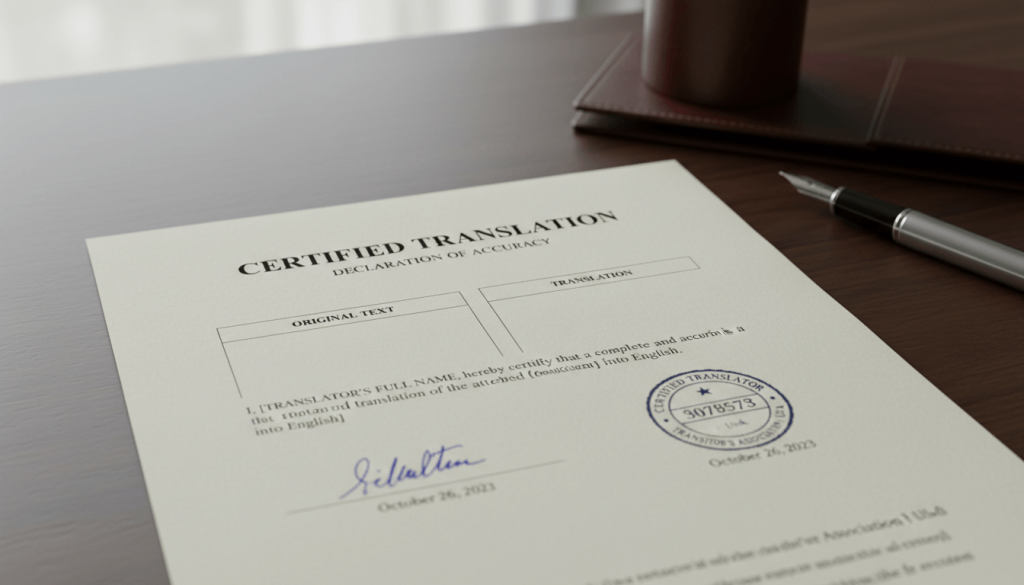
Who Can Certify a Translation in the UK?
A translation can usually be certified by:
- The translator who completed it
- A professional translation company
Certification typically includes:
- A signed declaration of accuracy
- Translator’s name, signature, and date
- Contact details and credentials
This is accepted by most UK authorities, universities, and employers.
Step 5: Choose a Specialisation (Critical for Success)
General translators struggle to compete. Specialisation increases trust, rates, and demand.
High-Demand Specialisms in the UK
- Legal translation (contracts, court documents)
- Certified translations (immigration, academic, civil records)
- Medical and healthcare translation
- Financial and corporate translation
- Technical and engineering translation
Clients rarely choose “general translators” for important documents.
Step 6: Gain Practical Experience (Even Without Clients)
If you’re starting out:
- Volunteer for NGOs or charities
- Translate sample documents professionally
- Build a portfolio aligned with your niche
Agencies care more about quality and relevance than years alone.
Step 7: Work with UK Translation Agencies
Most certified translators in the UK work with agencies before going fully independent.
Agencies provide:
- Consistent workflow
- Certification templates
- Quality assurance processes
This is often the fastest way to build credibility and income.
Step 8: Become a Certified Translator Without a Degree (Yes, It’s Possible)
If you don’t hold a degree:
- Obtain professional diplomas
- Build a verified portfolio
- Join professional bodies via assessment routes
- Work under agency supervision initially
Many successful UK translators followed this route.
Common Myths About Becoming a Certified Translator in the UK
“I need a government licence.”
No — credibility comes from qualifications and professional standing.
“Only native English speakers can translate into English.”
False — competence matters more than passport origin.
“Certification is the same everywhere.”
Incorrect — requirements vary by authority and country.
Career Progression & Earnings
Typical UK translation rates vary by:
- Language pair
- Subject matter
- Certification level
Certified translators working in legal, medical, or financial fields typically command higher rates than general translators.
Frequently Asked Questions
How long does it take to become a certified translator in the UK?
It can take anywhere from several months (with existing qualifications) to 2–3 years if completing formal study.
Do I need to pass an exam to become certified?
There is no single mandatory exam, but professional diplomas and assessments are strongly recommended.
Can I certify my own translations in the UK?
Yes, provided you are qualified and the receiving authority accepts translator-certified documents.
Is CIOL membership required?
Not legally, but it significantly strengthens professional credibility.
Can I work internationally as a UK-certified translator?
Yes, but certification requirements may differ depending on the destination country.
