
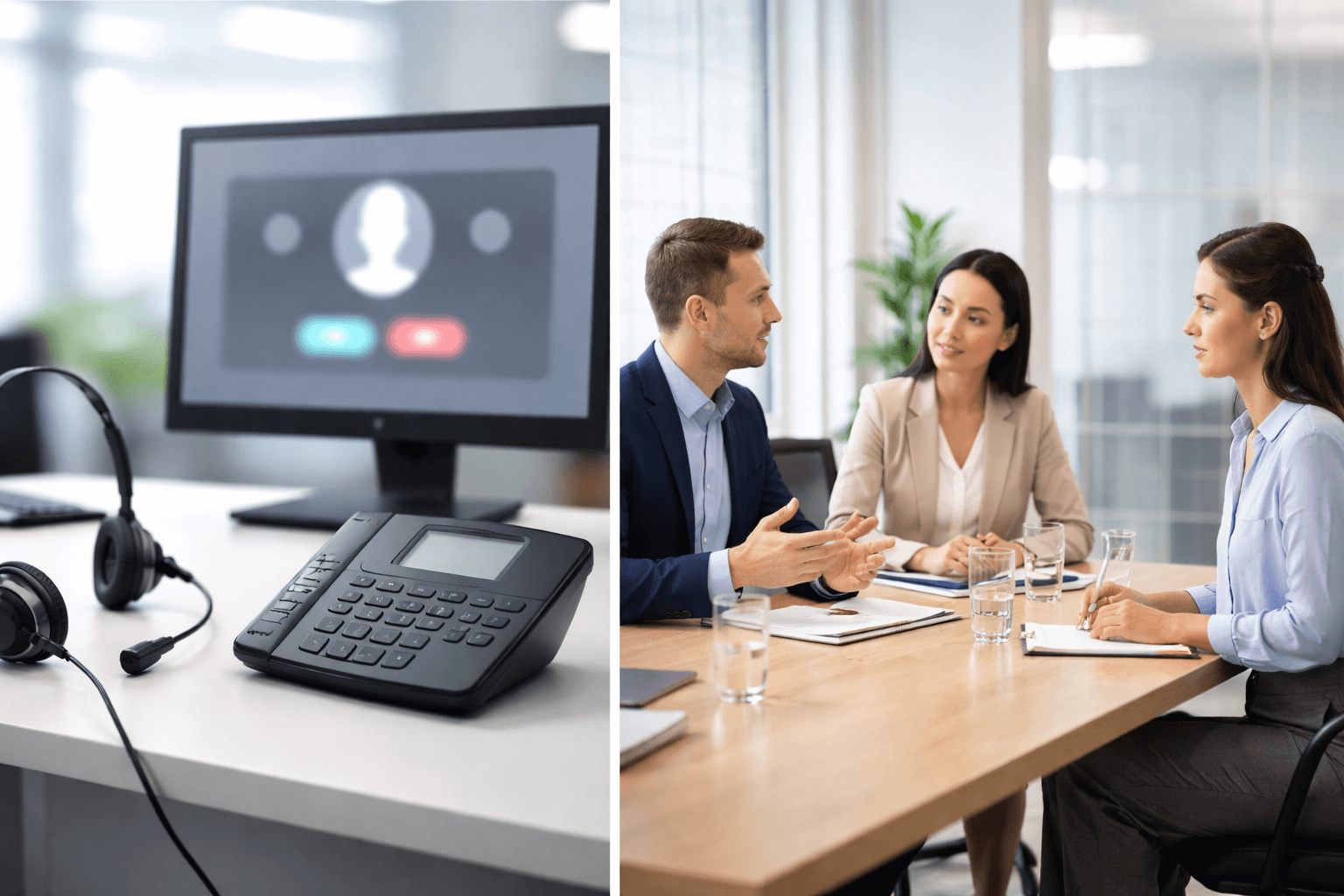
When you need language support, the real question usually isn’t “Do we need an interpreter?” It’s which format will keep the conversation accurate, fair, and on track—without slowing everything down.
Telephone interpreting is often the fastest way to get a qualified interpreter on the line, especially for short, time-sensitive conversations. In-person interpreting shines when context, safeguarding, and non-verbal cues matter—or when the stakes are high and misunderstandings are expensive.
This guide breaks down the pros and cons of each, then gives you a practical decision framework you can use in healthcare, legal, public sector, and business settings—plus ready-to-use checklists to make either format work smoothly.
If you already know your languages, setting, and timing, you can check availability now and we’ll match you with the right interpreter for the job.
What “telephone interpreting” means in practice
Telephone interpreting is real-time spoken interpreting delivered over a phone call. It’s typically used in one of these setups:
- Two-party call: you and the other party on speakerphone, interpreter joins as a third participant
- Conference call: multiple stakeholders dial in, interpreter supports one or both directions
- Call-centre / service desk: interpreter joins on demand to support customer interactions
Telephone interpreting works best when the conversation is structured, short-to-medium, and doesn’t rely heavily on visuals (forms, diagrams, physical demonstrations).
If you’re comparing formats across all remote options, this pairs well with video remote interpreting for situations where seeing faces, gestures, or documents improves clarity. (If you need broader options, see our language interpretation services overview.)
The quick comparison people actually care about
Speed and access
- Telephone interpreting: Usually the fastest to arrange. Ideal for urgent needs and rapid turnaround conversations.
- In-person interpreting: Requires scheduling and travel time, so it’s less immediate—especially for rarer languages or specialist settings.
Accuracy and nuance
- Telephone interpreting: Very accurate for clear, turn-based dialogue. Nuance can drop if people interrupt, speak fast, or talk over one another.
- In-person interpreting: Strongest overall for nuance—tone, pacing, body language, and group dynamics are easier to manage.
Confidentiality and trust
- Telephone interpreting: Often feels more private for some clients (no third person in the room), but trust depends on how well you introduce the interpreter and explain confidentiality.
- In-person interpreting: Can build rapport faster, especially with sensitive topics—while also requiring more active safeguarding and clear role boundaries.
Cost and efficiency
- Telephone interpreting: More cost-efficient for short bookings and quick interactions; no travel or minimum on-site blocks.
- In-person interpreting: Better value when the session is long, complex, multi-party, or when errors would be costly.
Telephone interpreting: the real advantages (and what people underestimate)
Pros of telephone interpreting
1) It’s the fastest route to language access
If you’re dealing with a same-day GP call, urgent housing query, last-minute HR issue, or a time-sensitive customer request, telephone interpreting can remove delays that would otherwise stop the conversation entirely.
2) It scales brilliantly for dispersed teams
If participants are in different locations (or hybrid), telephone interpreting avoids logistics and keeps everyone moving—especially for internal operations, customer support, and multi-site organisations.
3) It’s ideal for short, structured conversations
Think: confirming details, explaining next steps, clarifying a form, quick triage, appointment scheduling, follow-up calls.
4) It reduces logistical risk
No traffic delays. No venue access issues. No last-minute room changes. For many organisations, fewer moving parts means fewer failures.
5) It can feel less intimidating
Some clients speak more freely when the interpreter is not physically present—particularly for sensitive or personal topics—provided you introduce the interpreter properly and explain confidentiality clearly.
If you want to operationalise this across teams, we can set you up with a repeatable workflow and interpreter matching through our professional interpreting services.
Cons of telephone interpreting (and how to fix them)
1) No visual cues
You lose facial expressions, gestures, and the ability to “read the room”. That matters more when:
- emotions are high
- safeguarding is involved
- there are power dynamics (legal, medical, immigration, disciplinary meetings)
- the client has hearing or cognitive difficulties
Fix: If visuals matter, switch to video or book on-site. If phone is the only option, slow the pace and use the “teach-back” method (more on that below).
2) Turn-taking can collapse
Telephone interpreting fails when people talk over each other, interrupt, or ramble.
Fix: Use short segments (one idea at a time), and ask the interpreter to stop you if pacing drops.
3) Not suitable for document-heavy discussions
If you need to walk through a form line-by-line, review evidence, or reference physical items, telephone interpreting becomes clunky.
Fix: Share documents in advance (where appropriate), or move to video/on-site. If you also need documents translated around the appointment, combine interpreting with our translation, transcription and interpreting services so everything is consistent.
4) Audio quality can make or break accuracy
Poor signal, speakerphone echo, and noisy environments cause repetition and frustration.
Fix: Use a quiet room, strong signal, and a headset if possible. Treat audio like a critical resource, not an afterthought.
In-person interpreting: why it still wins in high-stakes situations
Pros of in-person interpreting
1) Strongest for nuance, rapport, and sensitive conversations
In-person interpreters can manage tone, pacing, and interpersonal dynamics more effectively. This matters in:
- mental health and safeguarding contexts
- complex legal meetings
- interviews involving trauma
- negotiations and dispute resolution
2) Better for group conversations and multiple speakers
Telephone interpreting becomes harder as the number of speakers grows. In-person interpreting helps maintain control and clarity in multi-party settings.
3) Supports visual context
When you need to reference physical documents, surroundings, or demonstrations, being in the room improves understanding.
4) Easier to manage the flow professionally
A skilled on-site interpreter can guide turn-taking, clarify when something is ambiguous, and keep the conversation structured without derailing the meeting.
Cons of in-person interpreting
1) Scheduling and logistics
Travel time and availability can limit speed—especially for urgent requests.
2) Higher costs for short interactions
For brief calls or 15–30 minute appointments, the logistics can outweigh the value.
3) Not always necessary
For straightforward administrative conversations, in-person is often more than you need.
If you’re unsure, tell us the setting and the goal of the conversation, and we’ll recommend the right mode via our language interpretation services.
Best use cases: what to choose in real-world scenarios
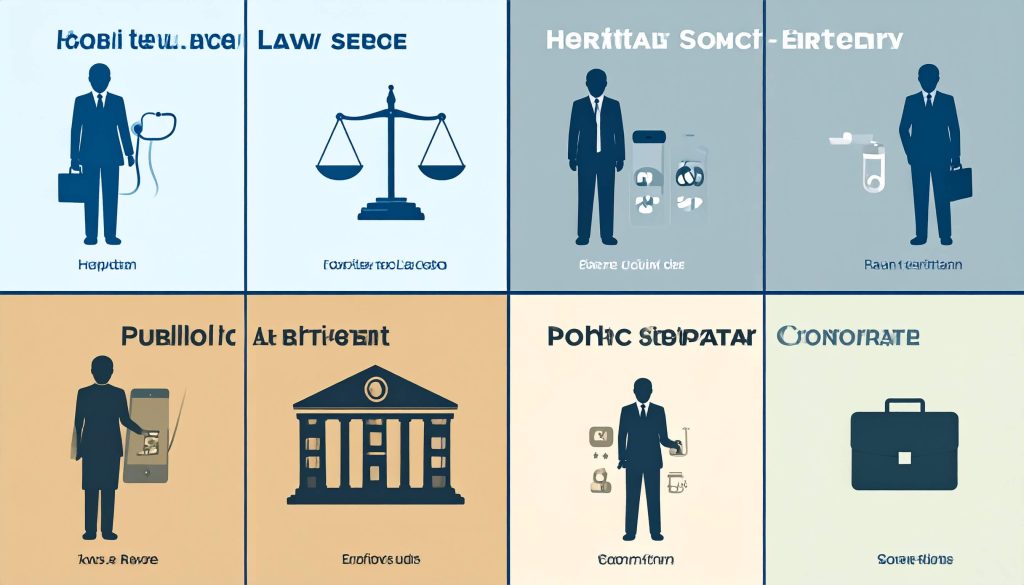
Healthcare and NHS-style settings
Choose telephone interpreting when:
- it’s a short appointment (triage, follow-up, appointment admin)
- you need urgent access
- the conversation is structured and predictable
Choose in-person interpreting when:
- safeguarding is involved (children, vulnerable adults)
- mental health assessments are complex
- the client has hearing/cognitive challenges
- you’re delivering serious news, consent discussions, or complex treatment plans
Pro tip: For clinical clarity, use a simple “teach-back” prompt:
“Can you explain in your own words what the plan is, so I can check I explained it clearly?”
Legal and court-related work
Choose telephone interpreting when:
- it’s administrative (scheduling, procedural clarifications)
- it’s time-sensitive and short
- it’s a quick solicitor-client call for straightforward matters
Choose in-person interpreting when:
- it’s evidential, contested, or high-stakes
- credibility, nuance, and precise register matter
- you need structured turn-taking, document references, or multiple parties
If your casework spans interpreting plus written evidence, it’s often cleaner to coordinate both through one team so terminology stays consistent—see our legal language services.
Public sector and local authorities
Telephone interpreting works well for:
- housing queries and appointment booking
- benefits clarifications and basic case updates
- service desk interactions
In-person is better for:
- social care meetings
- safeguarding concerns
- complex multi-agency discussions
Corporate, HR, and finance
Telephone interpreting is ideal for:
- customer service and call centres
- short HR check-ins and policy explanations
- quick negotiations or vendor calls
In-person is ideal for:
- disciplinary meetings
- redundancy consultations
- complex negotiations where trust and rapport matter
- group meetings with frequent cross-talk
If you support multiple languages across teams, it helps to standardise coverage—our languages we cover page can help you plan ahead.
The decision framework: choose the right mode in 60 seconds
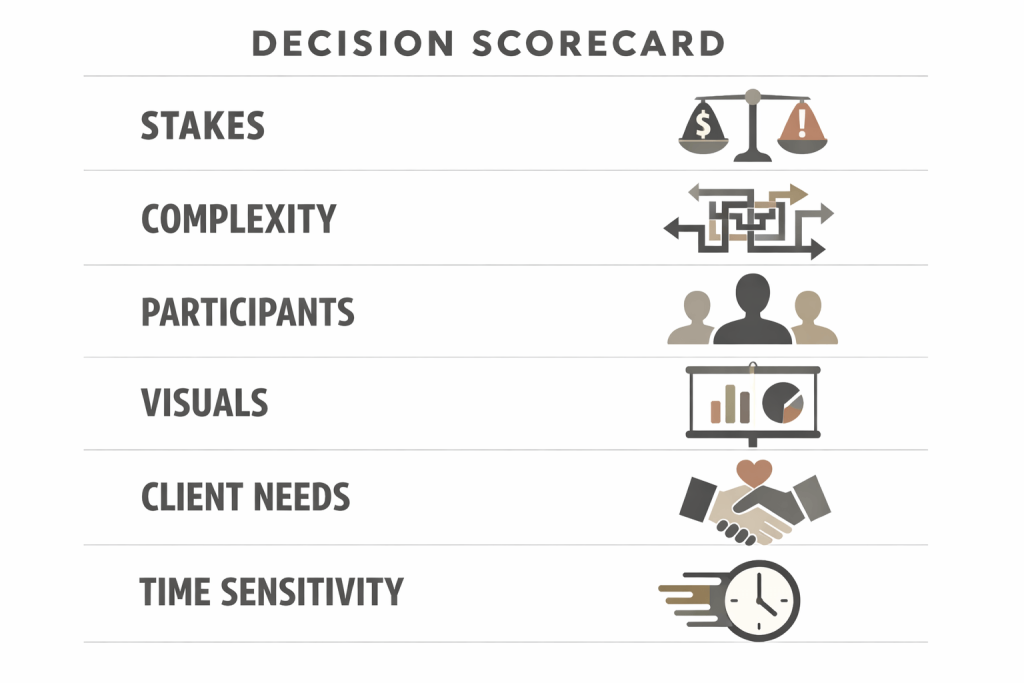
Use these six factors. If you score 3 or more in-person signals, book on-site (or switch to video if on-site isn’t possible).
1) Stakes
- Low: admin, scheduling, basic explanations
- High: consent, legal risk, safeguarding, medical complexity
2) Complexity
- Simple: short, predictable, one topic
- Complex: multiple topics, detailed narratives, technical language
3) Participants
- 1:1 or 1:2: telephone works well
- Groups / multiple speakers: in-person often wins
4) Visual reliance
- None: phone is fine
- Forms, evidence, demonstrations: in-person (or video)
5) Client needs
- No additional needs: phone can work
- Hearing/cognitive issues, distress, vulnerability: in-person strongly preferred
6) Time sensitivity
- Urgent today: telephone often best
- Plannable: choose the mode that reduces risk
If you want, you can send us the brief and we’ll recommend the best fit and match the right interpreter—start here: Contact us.
How to make telephone interpreting work brilliantly (scripts + checklist)
Telephone interpreting is not “inferior”—it’s different. The difference is that success depends more on facilitation.
The 20-second opening script (copy/paste)
“Hello, my name is __. We’ll speak in short sections. Please interpret everything said in the first person. If anything is unclear, stop us. Everything is confidential.”
The “golden rules” of a smooth phone interpreted call
- Speak to the client, not “to the interpreter”
- Use short segments (one idea at a time)
- Avoid jargon; if jargon is necessary, define it once
- Don’t interrupt the interpreter mid-rendering
- Confirm names, numbers, dates twice
- End with a summary and the next steps
Telephone interpreting setup checklist
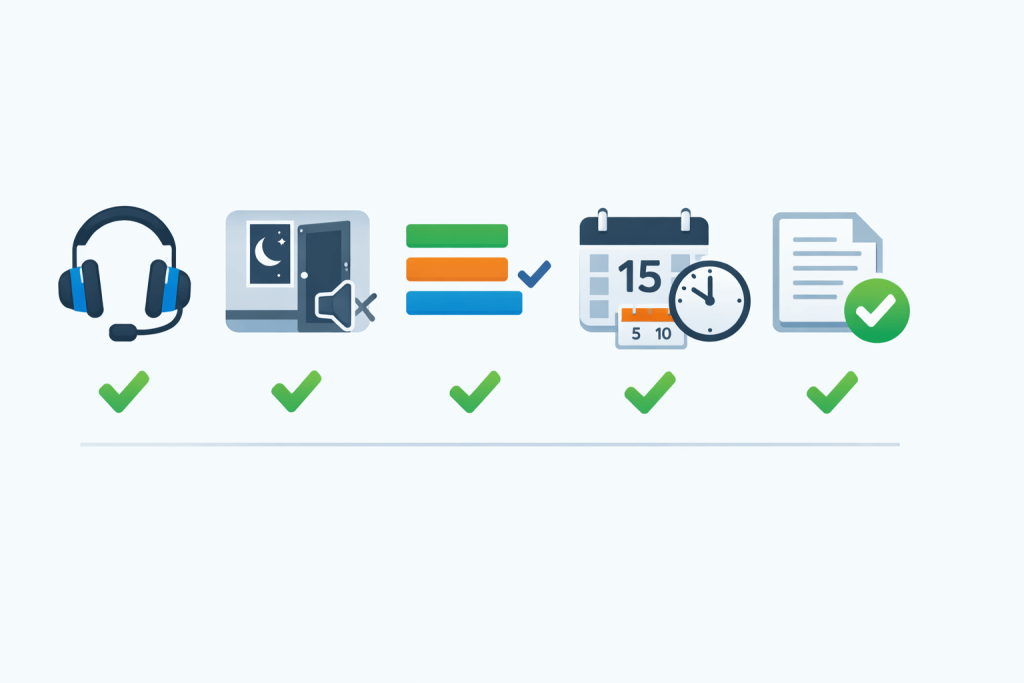
- Quiet room, strong signal, minimal echo
- Identify who will lead and who will take notes
- Confirm language and dialect (if relevant)
- Clarify the purpose and tone (formal, supportive, neutral)
- Plan how you will handle documents (if any)
- Keep a slow pace for the first 2 minutes—then adjust
If you need a reliable repeatable process for teams, we can help you standardise your workflow through our professional interpreting services.
What to ask an interpreter service before you book
Whether you choose telephone or in-person, the quality of the outcome depends on matching and governance. Ask:
- Do you match interpreters by sector (legal, medical, finance, public sector)?
- Can you provide qualified interpreters where required?
- What’s your process for confidentiality and data protection?
- Can you handle urgent bookings and rare languages?
- Do you provide coverage across locations and time zones?
- Do you keep booking records, attendance logs, and follow-ups?
At Transcribe Lingo, our approach is built for real-world settings—rapid booking where needed, sector-aware matching, and practical delivery across on-site and remote formats. If you’re ready, get a free quote and we’ll recommend the most suitable mode for your scenario.
A practical “best fit” summary
Telephone interpreting is usually best when you need:
- speed, flexibility, and cost efficiency
- short, structured conversations
- consistent coverage across many locations
- quick access in common languages
In-person interpreting is usually best when you need:
- maximum nuance and rapport
- safeguarding and vulnerable client support
- multi-party or emotionally complex discussions
- heavy use of documents or visual context
And if you’re on the fence, a simple rule works surprisingly well:
If a misunderstanding would create harm, legal exposure, or clinical risk—choose in-person (or video if on-site isn’t possible).
3) FAQ Section
What is telephone interpreting?
Telephone interpreting is real-time spoken interpreting delivered over a phone call, where a telephone interpreter helps two or more people communicate accurately in different languages.
Is telephone interpreting as accurate as in-person?
Telephone interpreting can be highly accurate for structured, turn-based conversations. In-person interpreting is often better when visual cues, group dynamics, or safeguarding needs are important.
When should I use a telephone interpreter service instead of on-site interpreting?
Use a telephone interpreter service for urgent or short conversations, appointment scheduling, quick clarifications, customer service calls, and situations where participants are in different locations.
How quickly can telephone interpretation services be arranged?
Telephone interpretation services are typically the fastest option and can often be arranged on short notice, depending on language demand and subject matter.
Is telephone interpreting confidential?
Yes—professional telephone interpreting is confidential. You should still confirm confidentiality at the start of the call and use a reputable provider with robust data protection practices.
Can telephone interpreting be used for medical or legal calls?
Yes, telephone interpreting is commonly used in medical and legal contexts for short, administrative, or time-sensitive calls. For complex or high-stakes matters, in-person (or video) is often the safer choice.
