

In today’s interconnected world, translation services play a critical role in bridging language barriers. Whether you need to translate business documents, legal contracts, or website content, translation services ensure accurate communication across different languages. But what exactly are translation services, and how do they work?
What Are Translation Services?
Translation services involve the conversion of written content from one language into another while preserving the original meaning. Professional translators are skilled in capturing not just words but also tone, context, and cultural nuances. These services cover a wide range of areas including business, legal, medical, and technical translations, to name a few.
What Is the Difference Between Translation and Interpretation?
While translation refers to written content, interpretation deals with verbal communication. Interpretation services enable individuals to communicate in real-time across language barriers, often in settings such as conferences, legal hearings, or medical appointments.
Types of Translation Services
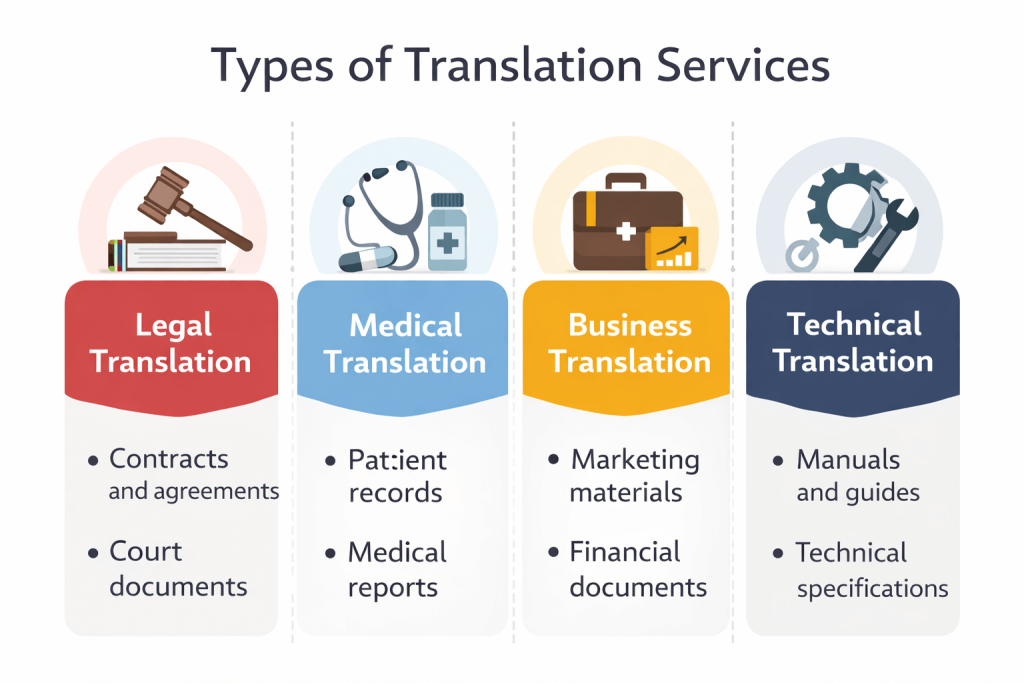
Translation services come in various forms depending on the type of content being translated. Here are the most common types:
1. Document Translation
This is the most common form of translation, where written documents are translated from one language to another. Documents can include contracts, manuals, marketing materials, books, and more.
2. Website Translation and Localization
Website translation is the process of adapting your website content to different languages. It also includes localization, which goes beyond simple translation by adapting the content to local cultural norms and preferences.
3. Certified and Sworn Translation
Certified translation is used for official purposes such as immigration applications, legal documents, or any government-related procedure. Sworn translators take an oath to ensure the accuracy and authenticity of their translations, making their work legally valid in certain jurisdictions.
4. Technical Translation
Technical translation requires specialized knowledge in a particular field such as engineering, science, or IT. It involves translating manuals, technical specifications, user guides, and other complex documents that require precise terminology.
5. Legal Translation
Legal translation covers documents such as contracts, agreements, court transcripts, patents, and other legal materials. Precision and attention to detail are paramount in legal translations to ensure compliance with laws.
6. Medical Translation
Medical translation refers to the translation of documents in the healthcare field, such as patient records, medical research papers, or pharmaceutical instructions. Accuracy is critical to avoid misinterpretations that could affect patient care.
7. Literary Translation
Literary translation involves translating books, poems, and other forms of literature. This type of translation requires a deep understanding of the literary style, culture, and nuances in both the source and target languages.
How Translation Services Work

The process of translation varies depending on the complexity and scope of the project. Here’s a step-by-step guide on how most translation services work:
Step 1: Initial Consultation
The client provides the translator or translation agency with the material to be translated. During this stage, it is crucial to discuss the scope, deadlines, and any specific requirements such as formatting, terminology, or industry-specific jargon.
Step 2: Translation
Once the project is understood, the translator begins the actual translation process. This involves converting the text while ensuring that the tone, meaning, and style are preserved. For highly specialized translations, such as medical or legal content, subject-matter expertise is often required.
Step 3: Editing and Proofreading
After the translation is completed, it undergoes editing and proofreading. This ensures that the translated text is accurate, grammatically correct, and culturally appropriate. Often, this is done by a different translator to ensure fresh eyes on the document.
Step 4: Final Review and Quality Check
The final stage involves a review process where the translation is double-checked for consistency, accuracy, and clarity. Quality assurance specialists might also check for any formatting issues, ensuring that the document is visually consistent with the original.
Step 5: Delivery
Once the translation is ready, it is delivered to the client in the required format. Many translation agencies offer file formats like Word, PDF, or even HTML for web content.
Why You Need Translation Services

Translation services are essential in today’s globalized world, where businesses, legal entities, and individuals often operate in multiple languages. Here are some reasons why you might need professional translation services:
- International Business Expansion: When expanding globally, translating business documents, websites, and marketing materials ensures that you can effectively communicate with your target audience.
- Legal Compliance: Accurate translation of legal documents is crucial to avoid misunderstandings that could result in legal consequences.
- Access to Global Markets: Translating content helps break down language barriers and gain access to international markets, reaching customers who may not speak your language.
- Cultural Sensitivity: Professional translation services also account for cultural differences, ensuring that your content resonates well with diverse audiences.
FAQs
What Are Translation Services Used For?
Translation services are used for converting written content from one language to another. These services are used in various fields including business, legal, medical, technical, and literary translation.
How Do Translation Services Work?
Translation services work by converting text from a source language into a target language while ensuring the meaning, tone, and cultural nuances are accurately captured. The process typically includes translation, editing, proofreading, and a final review before delivery.
What Is the Difference Between Translation and Interpretation?
Translation deals with written content, whereas interpretation focuses on spoken language. Interpreters convert spoken words in real-time, while translators work with written materials.
How Much Do Translation Services Cost?
The cost of translation services can vary depending on the language pair, complexity, and length of the content. On average, professional translations are priced per word, page, or hour, with additional charges for specialized fields like legal or medical translation.
Why Is Accurate Translation Important?
Accurate translation is crucial for ensuring that the meaning, tone, and cultural nuances of the original text are preserved. Inaccurate translations can lead to misunderstandings, legal issues, and damage to brand reputation.
