

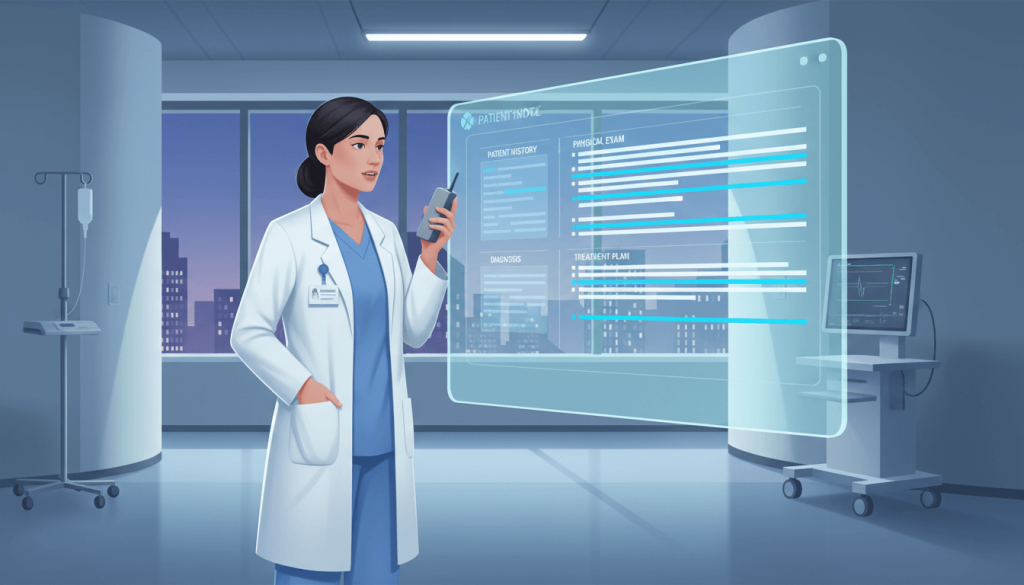
Medical notes can’t live as voice recordings. Clinicians need clear, structured text inside the patient record — quickly, accurately, and securely. That’s where medical transcription comes in.
Put simply, medical transcription turns spoken clinical dictation (or recorded consultations) into written documentation that can be reviewed, stored, and used by care teams.
This guide explains what is medical transcription, how does medical transcription work, what medical transcriptionists actually do, what medical transcription services include, and how to choose a safe, reliable transcription partner.
What Is Medical Transcription?
Medical transcription is the process of converting voice-recorded medical reports into written documents used in clinical records. These reports may include appointment notes, discharge summaries, operative notes, imaging reports, and more.
Unlike general transcription, medical transcription requires:
- A strong understanding of medical terminology and common abbreviations
- Careful formatting to match clinical standards
- Attention to risk (a “small” error can become a patient-safety issue)
- Strict confidentiality around patient information
Medical transcription vs medical scribing (what’s the difference?)
Both support clinical documentation, but the workflow differs:
- Medical transcription usually happens after the encounter (a clinician dictates; transcription produces the record).
- Medical scribes may document during the encounter (in-person or remotely), often working in real time.
Many organisations use a blend: clinicians dictate key sections, AI produces a draft, and a trained specialist edits and checks accuracy.
What Does Medical Transcription Do in Real Practice?
People search variations like “what does medical transcription do” and “what do medical transcription do” because the role often gets oversimplified as “typing”.
In reality, medical transcription supports the whole clinical documentation chain by turning spoken clinical details into a reliable written record that can be:
- Read quickly by clinicians across shifts
- Used for continuity of care
- Stored in EHR systems
- Audited for compliance and medico-legal needs
- Shared (appropriately) for referrals and multidisciplinary care
When done properly, it reduces admin burden while improving the clarity and usability of notes.
What Is Medical Transcription Work?
Medical transcription work is the day-to-day task set involved in producing accurate clinical documentation from recordings or dictated notes.
Typical responsibilities include:
- Listening to recordings or dictations and transcribing them into structured documents
- Correctly expanding abbreviations (and flagging ambiguous ones)
- Checking drug names, dosages, lab values, and clinical terms
- Ensuring spelling and formatting consistency
- Identifying missing or unclear information and marking it for clinician review
- Aligning the final output with the clinic/hospital’s preferred templates
Medical transcription work isn’t just speed — it’s precision under time pressure
How Does Medical Transcription Work? (Step-by-Step)
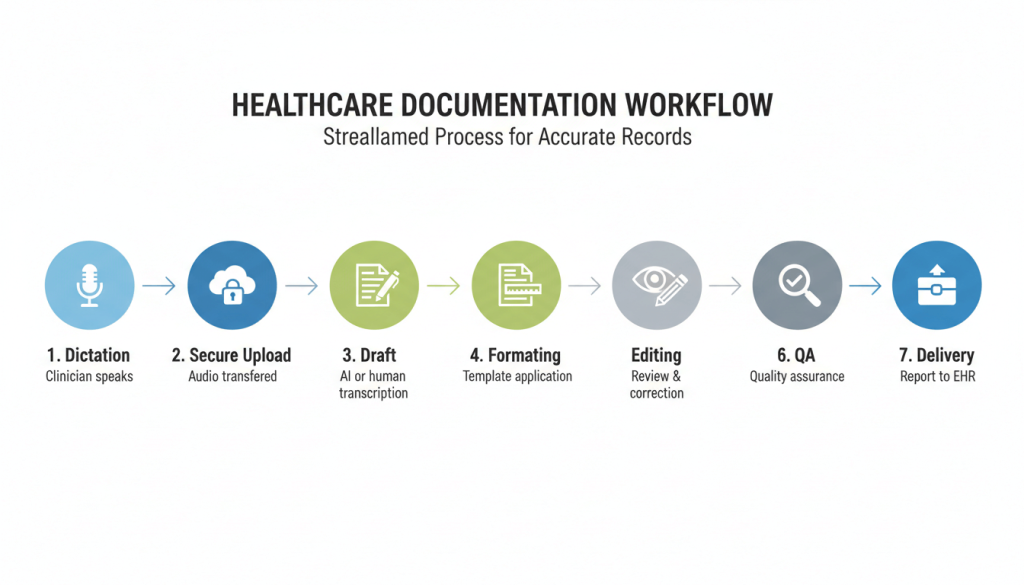
If you’re asking “how does medical transcription work”, this is the simplest end-to-end view:
- A clinician records or dictates notes
This may happen after a consultation, ward round, procedure, or MDT meeting. - The audio is securely transferred
Recordings are uploaded to a secure portal or sent through approved encrypted channels. - A draft is produced (human, AI, or hybrid)
- Human-first transcription: typed from audio by a trained specialist
- AI-first draft: produced by speech recognition
- Hybrid: AI draft + human editing and quality checks
- Clinical formatting is applied
Notes are organised into a consistent structure (e.g., headings, sections, speaker identification where relevant). - Editing and verification
This is where risk is reduced: terms, numbers, medication names, and context are checked carefully. - Quality assurance
A second review may be applied for higher-risk content, complex audio, or regulated environments. - Delivery and integration
The final document is delivered in the agreed format and can be uploaded into clinical systems or used internally.
Where VRT fits into the workflow
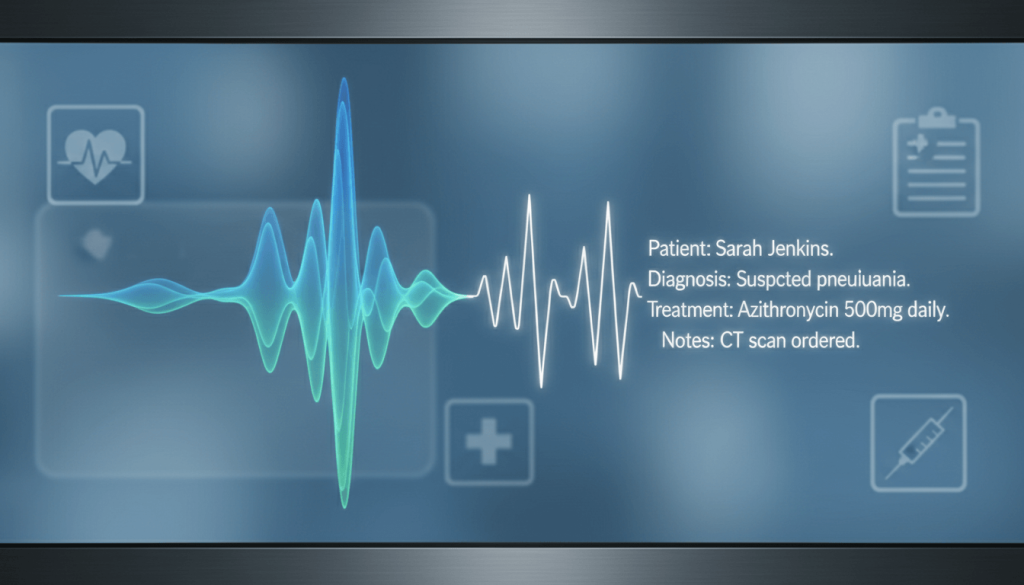
If you’ve seen the term VRT and wondered what it means:
What does VRT stand for in medical transcription?
VRT stands for Voice Recognition Technology — tools that convert speech into text. VRT can speed up documentation, but it still needs careful review, especially for medical terminology, accents, background noise, and fast speech.
What Are Medical Transcription Services?
People also search “what are medical transcription services”, “what is medical transcription services”, and “what is a medical transcription service”.
A medical transcription service is a managed solution that handles the workflow end-to-end — from secure intake through to delivery — so healthcare organisations don’t have to manage staffing, tooling, quality, and turnaround internally.
Medical transcription services commonly include:
- Audio-to-text transcription for clinical notes and reports
- Editing of voice-recognition drafts (VRT output)
- Standardised formatting to match clinical templates
- Speaker labels (for MDT meetings, interviews, multi-speaker recordings)
- Timestamps (when needed for reviews, audits, or training)
- Glossary support (consistent spelling of clinician names, departments, medication lists)
- Secure delivery and retention controls (based on your requirements)
The three delivery models (and which one fits healthcare)
1) Human-only (highest assurance)
Best for complex terminology, poor audio, high-stakes documentation, and medico-legal sensitivity.
2) AI-only (fast, but higher risk)
Can work for low-risk internal notes with clear audio — but may struggle with nuance and similar-sounding clinical terms.
3) Hybrid (best balance for many teams)
AI accelerates the first draft; trained reviewers correct meaning, terminology, and structure.
What Documents Are Common in Medical Transcription?
Medical transcription isn’t just “clinic notes”. It can include:
- Consultation notes (GP and specialist)
- Discharge summaries
- Operative notes
- Radiology and imaging reports
- Pathology reports
- Referral letters
- ED notes
- MDT meeting summaries
- Mental health assessments
- Clinical research interviews (where consent and confidentiality are managed correctly)
A good transcription brief clarifies what you need (and avoids wasted rework later).
Why Medical Transcription Still Matters (Even with Modern EHRs)
EHR systems store information — they don’t create it. Someone still needs to capture what happened, what was decided, and what the plan is.
Medical transcription helps when:
- Clinicians need to document fast without typing constantly
- Notes must be consistent across teams and sites
- Documentation quality impacts safety, referrals, or continuity of care
- Administrative burden is contributing to burnout
- Organisations need defensible records for audits or disputes
In healthcare, “good enough” documentation can become tomorrow’s clinical problem. Transcription, done properly, supports safer decision-making.
Accuracy in Medical Transcription: The “Clinical Risk Ladder”
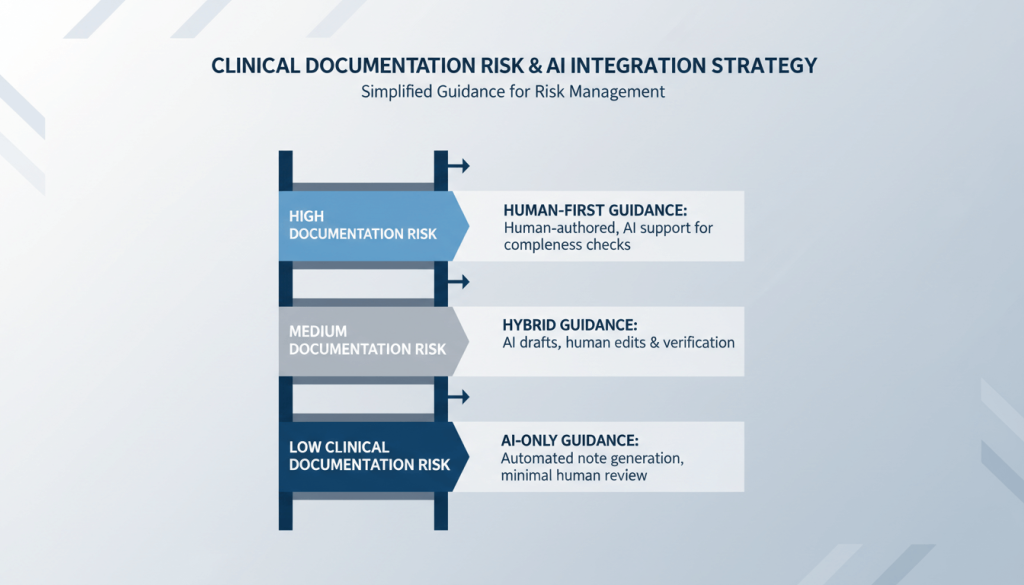
Not every transcript carries the same risk. One of the easiest ways to decide between human vs AI vs hybrid is to tier your work.
Low-risk (AI can be acceptable with checks):
- Internal training notes
- Non-clinical admin recordings
- Clear audio, single speaker, no medication details
Medium-risk (hybrid recommended):
- Routine clinic notes
- MDT summaries where decisions and follow-ups matter
- Discharge notes where structured formatting is required
High-risk (human-first + QA recommended):
- Anything involving medication changes, dosages, allergies, or test values
- Surgical or procedural notes
- Complex multi-speaker recordings
- Notes used for medico-legal contexts or disputes
If you’re unsure where something sits, treat it as higher-risk.
Privacy and Confidentiality: What “Secure” Should Mean

Medical transcription involves sensitive patient information. Whether you’re a clinic, a hospital team, or a healthcare organisation outsourcing work, you should expect clear answers on:
- How files are uploaded and stored
- Who can access them (and how access is logged)
- How long data is retained
- Whether subcontractors are involved
- How confidentiality is enforced (NDAs, permissions, training)
- How errors and revisions are handled
- What happens if audio includes third-party information or identifiable details
A reliable provider will not hesitate to walk you through their safeguards and documentation process.
Turnaround Times and Cost Drivers (What Actually Changes the Quote)
Medical transcription pricing and turnaround are shaped less by “minutes of audio” and more by complexity.
Common factors include:
- Audio quality (background noise, overlap, poor recording devices)
- Number of speakers and interruptions
- Speciality and terminology density
- Required format (templates, headings, timestamps, speaker labels)
- The level of QA requested (single pass vs second-review)
- Urgency (same-day, next-day, standard turnaround)
- Whether translation is needed alongside transcription
If you want the fastest accurate quote, send:
- A short sample clip (2–3 minutes)
- The intended use (EHR, internal review, compliance, research)
- Any template you want followed
How to Choose a Medical Transcription Service (A Practical Checklist)
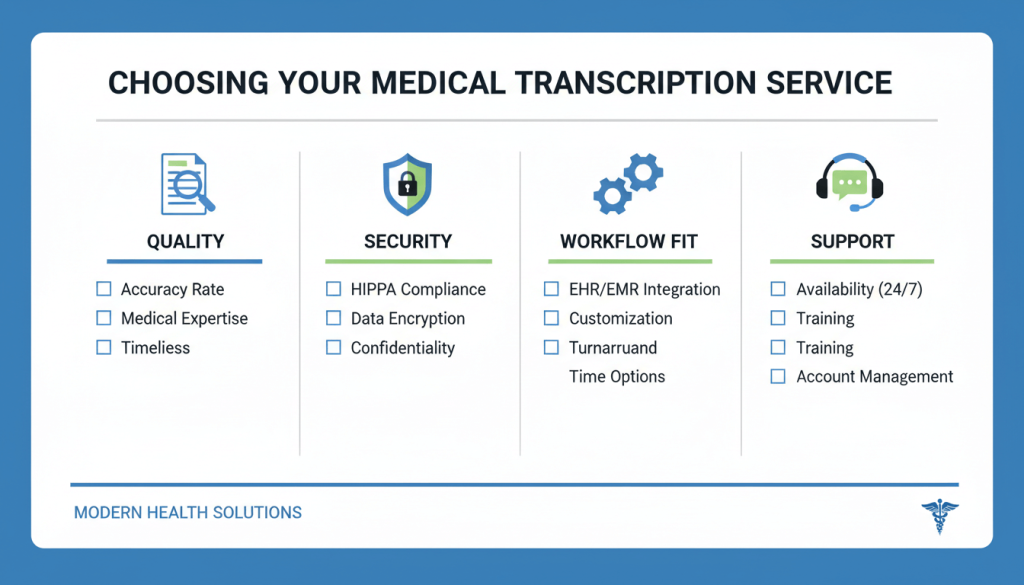
Use this as a quick filter before you shortlist:
Quality
- Do they offer human review options?
- Can they handle your speciality terminology?
- Do they flag uncertainty rather than guessing?
Security
- Secure upload and delivery
- Clear retention and deletion policy
- Controlled access and confidentiality processes
Workflow fit
- Can they match your templates?
- Can they handle volume spikes?
- Do they offer timestamps/speaker labels when needed?
Support
- Clear communication on turnaround
- A named contact or project manager for ongoing work
- Sensible revision process
If a provider can’t explain these plainly, that’s a warning sign.
Mini Examples: Where Medical Transcription Adds Immediate Value
Example 1: Busy clinic reducing after-hours admin
Clinicians dictate notes at the end of each session. Transcription delivers consistent, readable documentation the next day, reducing time spent rewriting notes.
Example 2: MDT meetings that need decisions captured properly
Multi-speaker audio is transcribed with speaker labels and structured headings, making actions, responsibilities, and follow-ups easy to track.
Example 3: Telehealth teams improving continuity of care
Recorded consultations are converted into structured notes, making it easier for different clinicians to pick up the patient history without re-listening.
The Future: VRT, AI Drafts, and “Ambient” Note-Taking
Voice Recognition Technology (VRT) and modern AI tools are changing documentation — but the direction is clear: speed is improving faster than reliability.
A safe approach is to treat automation as a drafting tool, not a final clinical record:
- Use VRT to accelerate first drafts
- Keep a human-in-the-loop for checking meaning and clinical terminology
- Prioritise higher assurance for higher-risk notes
For healthcare documentation, the goal isn’t “fastest transcript”. It’s “fast enough, accurate enough, defensible enough.”
Getting Started with Transcribe Lingo
If you need medical transcription you can rely on, start with a simple workflow:
- Share your recording securely
- Tell us your preferred format, turnaround, and any templates
- We assign the right specialists for your content
- You receive a clean, structured transcript ready to use
If you’d like, you can send one sample file first — we’ll recommend the best approach (human, AI-assisted, or hybrid) based on the risk level and audio quality.
“We’re glad to have Transcribe Lingo as our long-term transcription partner — never lets you down.”
FAQs
What is medical transcription?
Medical transcription is the process of converting spoken clinical dictation or recorded medical audio into written documentation used in patient records.
How does medical transcription work in healthcare?
A clinician records or dictates notes, the audio is transferred securely, a transcript is produced (human, AI, or hybrid), then edited, checked, and delivered in a structured format.
What does medical transcription do for doctors and clinics?
It reduces documentation workload, improves clarity of notes, supports continuity of care, and helps teams access accurate records without re-listening to audio.
What is a medical transcription service?
A medical transcription service is a managed provider that securely converts medical audio into structured written documents, often including editing, formatting, and quality checks.
What are medical transcription services typically used for?
They’re used for consultation notes, discharge summaries, operative reports, MDT meetings, referral letters, and other clinical documentation that must be stored and shared safely.
What does VRT stand for in medical transcription?
VRT stands for Voice Recognition Technology — software that converts spoken dictation into text. In healthcare, it usually requires careful review and editing.
