

If you’ve searched how to become a sworn translator, you’ve probably noticed something confusing: “sworn translator” doesn’t mean the same thing everywhere. In some countries it’s a protected legal status tied to courts or ministries. In others (including the UK), the more common concept is certified translation rather than a formal “sworn” title.
This guide clears it up—country by country—so you know exactly what you need to do in the UK, Belgium, Spain, and several other European systems.
What “sworn translator” actually means (and why it varies)
A sworn translator is typically a translator who has been formally authorised by a public body (often a court, ministry of justice, or government register) to produce translations that carry legal weight—usually backed by:
- an oath or formal authorisation
- an official registration number (in many systems)
- a prescribed stamp/seal and certification statement
- inclusion in a public register you can search
However, the legal mechanism differs:
- Court-based systems: you become a court-appointed expert (often renewed periodically).
- Register-based systems: you meet criteria, get approved, then swear an oath and appear on a national register.
- Exam-based systems: you pass a national exam, then obtain a government-issued title.
Quick decision guide: which route applies to you?

Use this to avoid wasting months on the wrong pathway.
You likely need a sworn translator route if…
- the translation is for courts, police, notaries, immigration authorities, or official registries in a country that requires sworn status
- the receiving authority explicitly asks for: sworn / sworn-in / authorised / court-certified / assermenté / beeidigd / ermächtigt
You may not need sworn status if…
- the authority accepts a certified translation signed by a qualified translator (common in the UK and many international contexts)
If you’re not sure which one applies to your document, a practical starting point is the receiving authority’s wording. If you need help fast, you can upload your document and instructions via Transcribe Lingo’s service pages and we’ll tell you what level is actually required:
The common requirements most countries share
Even though each country runs its own system, successful applicants typically have the same foundations.
Qualifications & competence
- Degree-level education (often required; sometimes specifically in translation or languages)
- Near-native proficiency (usually C1/C2-level competence in practice)
- Proven ability to translate legal and administrative documents accurately
Integrity checks
- Clean criminal record / good conduct certificate
- Professional conduct expectations and liability awareness
Professional readiness
- Familiarity with:
- legal terminology
- formatting of official documents
- certification wording and record-keeping
- confidentiality and data protection
Country-by-country: how to become a sworn translator
Below are the real-world pathways you’ll see most often—what you do, who approves you, and what to prepare.
How to become a sworn translator in the UK
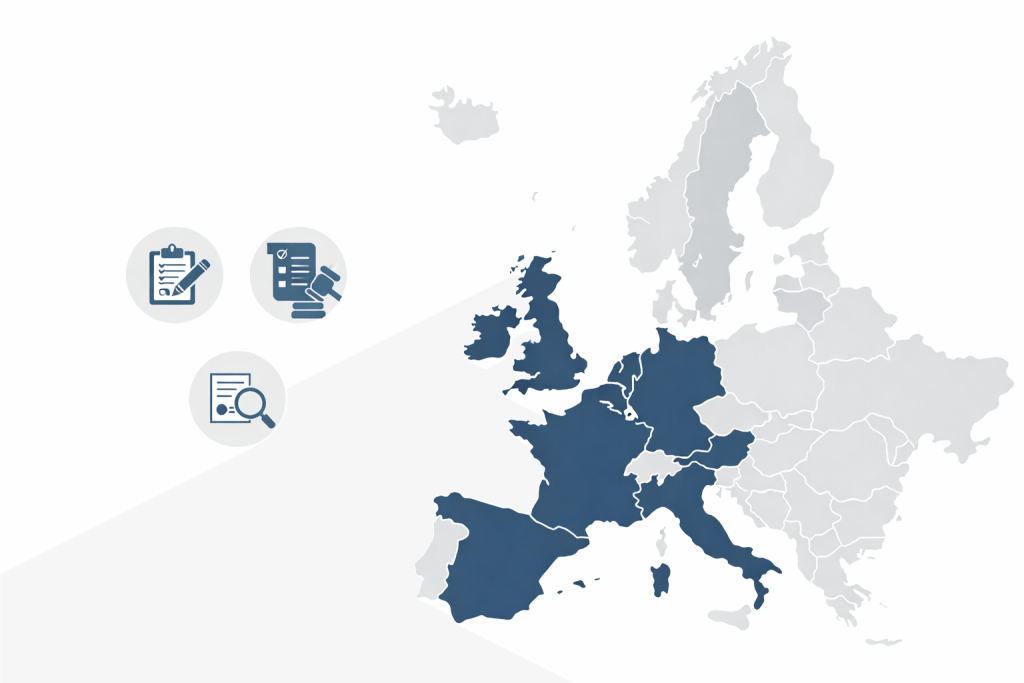
Let’s address the big one: there is no single, government-issued “sworn translator” title in the UK equivalent to Spain or Belgium.
In the UK, official bodies usually ask for a certified translation. That typically means the translation is accompanied by a signed certification statement confirming accuracy, translator details, and date.
So what does “how to become a sworn translator UK” really mean in practice?
In most UK contexts, it means one of the following:
- Becoming a qualified professional translator (training + experience)
- Joining a recognised professional body (commonly used as a credibility signal)
- Learning to produce proper certified translations accepted by authorities
- Building a track record in official/legal work
A practical UK pathway (step-by-step)
- Get strong bilingual mastery (including legal/admin language, not just conversational fluency).
- Train formally (translation studies, linguistics, or specialist legal translation training).
- Build a portfolio: civil documents (birth/marriage certificates), education (transcripts), and legal templates.
- Learn UK-style certification: a clean certification statement, consistent formatting, and clear traceability.
- Join or align with professional standards (widely recognised bodies can support credibility with clients and agencies).
- Specialise: immigration, academic, legal, medical—specialisation increases acceptance and earning power.
What UK clients and authorities usually want to see
- Translator’s name and contact details
- Statement confirming the translation is accurate and complete
- Signature and date
- Professional credentials (where applicable)
If you want a benchmark for how certified translations are usually presented to UK authorities, see:
And if you’re building a career in official documents, you’ll want strong legal formatting habits:
How to become a sworn translator in Belgium
Belgium uses a sworn translator/interpreter register approach. In simple terms, you become approved, take an oath, and then appear in a national register.
What “sworn” means in Belgium
A sworn translator is typically a translator who is:
- formally authorised (linked to judicial/official use), and
- included in the national register used by institutions and the public to verify status.
The Belgium pathway (high level)
- Check eligibility requirements (qualifications + integrity).
- Prepare your application file (proof of competence, identity, clean record).
- Complete any required legal knowledge component if applicable to your profile.
- Take the oath before the competent authority (where required).
- Ensure you appear in the public register so clients can verify you.
What to prepare (Belgium application pack checklist)
- ID and residency documents (as required)
- Qualifications / diplomas and proof of language competence
- Evidence of translation experience (contracts, portfolio, references)
- Certificate of good conduct / criminal record extract
- Any required professional/ethical declarations
- (Where applicable) proof of legal knowledge training/certification
How to stand out (Belgium)
Belgium is multilingual and often high-demand for official translations. Strong candidates usually demonstrate:
- consistent experience in legal/admin translation
- structured QA workflow
- familiarity with formal formatting and certification statements
If you’re aiming at legal institutions, practise “institution-ready” deliverables: clean layout, careful terminology, and consistent naming conventions.
How to become a sworn translator in Spain (Traductor/a Jurado/a)
Spain is one of the clearest examples of a national exam + title + register model.
What “sworn translator” means in Spain
A sworn translator (commonly associated with traductor/a jurado/a) is a translator whose title is awarded through a regulated process and recorded officially—so their translations are recognised for official use.
The Spain pathway (step-by-step)
- Meet eligibility requirements (age, nationality/eligibility category, and degree-level education requirements).
- Apply when an exam is announced for your language(s).
- Pass the exam stages, which commonly include:
- a test component (grammar/terminology)
- translation exercises (general and legal/economic)
- an oral stage (often consecutive interpreting or spoken assessment)
- Submit post-exam documentation for issuance of the title.
- Registration and verification (so institutions can confirm you’re authorised).
What to expect from Spain’s exam style
- Time pressure and strict exam conditions (including restrictions on dictionary type)
- High scoring emphasis on:
- accuracy
- register (formal tone)
- legal/administrative terminology
- formatting conventions for official documents
A smart preparation strategy (Spain)
- Build a “repeatable” practice set:
- birth/marriage certificates
- police clearance certificates
- academic records
- powers of attorney
- company extracts
- Train error control:
- names, dates, stamps, and serial numbers
- consistency in transliteration
- formatting parity with the original
If you live outside Spain
Many people searching how to become a sworn translator in Spain are living elsewhere. Your eligibility will depend on the current rules and categories. Plan for:
- document legalisation/homologation needs (for foreign degrees)
- practical logistics for application windows and exam dates
- certification and identity checks
The Netherlands pathway (typical steps)
- Apply to the responsible bureau for inclusion in the register (qualifications + integrity).
- Provide a certificate of conduct and evidence of competence/experience.
- Once accepted, complete the swearing-in step at the competent court.
- Finalise registration, keep proof of oath/authorisation, and renew as required.
What makes the Dutch system distinctive
- Formal register entry is central (clients and institutions verify via the register).
- Renewal and continuing education requirements matter—this is not a “set and forget” status.
Germany: state-based authorisation (sworn / authorised / publicly appointed)
Germany is important because many English-language guides oversimplify it.
What “sworn translator” means in Germany
Germany’s authorisation is state-specific. Translators may be:
- generally sworn-in
- publicly appointed
- authorised/empowered
The labels vary by region, and the requirements can differ.
The Germany pathway (high level)
- Identify your target federal state (Bundesland).
- Apply to the responsible authority (often linked to courts/justice administration).
- Provide proof of competence, reliability, and professional suitability.
- Take the oath / complete authorisation.
- Ensure you’re searchable in the official database used by authorities and the public.
The practical takeaway
If you’re planning your career around Germany, choose your base state early—your administrative route depends on it.
France: “traducteur assermenté” via court expert lists
France is commonly described as “sworn translator”, but the mechanism is usually court-related.
What “sworn translator” means in France
A translator is typically “assermenté” in practice when they are a judicial expert registered with a Court of Appeal list, used for official translations.
The France pathway (high level)
- Build professional credibility: education + substantial experience.
- Apply to be included on an expert list (Court of Appeal level).
- Provide supporting documents: qualifications, references, proof of work, and professional standing.
- If accepted, follow the obligations expected of court experts (ethics, standards, ongoing suitability).
What improves your odds (France)
- demonstrable specialisation (legal, civil status documents, corporate/legal filings)
- evidence of professional practice over time
- strong administrative reliability (deadlines, formal presentation, traceability)
Luxembourg: sworn translators linked to justice institutions
Luxembourg is smaller but highly relevant for cross-border documentation.
The Luxembourg pathway (typical steps)
- Apply via the Ministry of Justice process (requirements + verification).
- Once authorised/sworn in, you may appear on the coordinated lists used by institutions and clients.
“Sworn translator” vs “certified translation”: how to explain this to clients
This is where professionals win trust. A simple client-friendly explanation:
- Certified translation (UK-style): the translator certifies accuracy with a signed statement; acceptance depends on the receiving body’s rules.
- Sworn translation (many EU systems): a translator has a formal legal status granted by a court/ministry; translations carry official recognition through that status.
If you work internationally, your value increases when you can quickly identify what a client actually needs—and prevent rejections.
If you’re unsure what level applies to a specific authority, clients can upload the document and the receiving authority instructions so you can assess requirements before anyone pays twice:
The “document-ready” skillset that separates pros from beginners

Regardless of country, sworn work is judged on precision. These are the skills that matter most:
1) Controlled formatting
- mirror structure (headings, tables, stamps, signatures)
- preserve numbering and codes
- consistent handling of names/places
2) Terminology discipline
- build your own termbase for civil status, legal, and administrative terms
- avoid “almost equivalents” (especially for legal roles and institutions)
3) Certification hygiene
- correct certification wording for the jurisdiction
- consistent stamp placement and signature conventions (where applicable)
- clean audit trail: versioning + record keeping
4) Risk management
- know what you must not “fix” (e.g., incorrect names on originals)
- handle illegible scans responsibly (notes, brackets, translator’s notes where permitted)
A realistic timeline: how long it takes to become sworn
This varies massively, but here’s a realistic planning model:
- UK (certified translation route): months to become competent + build credibility; longer to specialise deeply
- Exam-based countries (e.g., Spain): depends on exam frequency and your readiness; plan a serious preparation cycle
- Register/court-list systems (e.g., Belgium/France): experience + documentation preparation can be the longest part
A practical tip: treat it like a professional accreditation project. Build an “application binder” with:
- qualifications
- identity documents
- proof of work
- references
- good conduct certificate
- CPD/training logs
This saves time if you later apply in more than one country.
How to build paid work once you’re sworn (without burning out)
Sworn status helps you get accepted. It doesn’t automatically fill your pipeline. The best professionals build stable demand through:
Choose a niche that naturally needs sworn work
- immigration and visas
- citizenship applications
- academic recognition and admissions
- litigation support
- notarial and corporate documents
Package your service clearly
Clients don’t want “translation”. They want outcomes:
- “court-ready translation”
- “immigration-ready document pack”
- “same-day certified translation where accepted”
Make verification easy
High-trust clients love:
- your registration number (where applicable)
- clear confirmation of what your certification covers
- simple upload + quote workflow
If you want a benchmark for how professional intake and delivery can look, review Transcribe Lingo’s service structure:
Common mistakes that get applications rejected
These are the errors that quietly destroy applications—especially in court/register systems:
- Submitting weak proof of competence (no evidence of real-world translation work)
- Missing or outdated good conduct documentation
- Overstating language ability without measurable evidence
- Ignoring local rules on qualification equivalence (especially with foreign degrees)
- Poor admin hygiene: inconsistent names, missing signatures, incomplete forms
- Applying without understanding whether the country is exam-based or court-list based
If you only remember one thing…
When people ask how to be a sworn translator, they often assume it’s one universal certification. It isn’t.
Start with:
- Where will the translation be used?
- What exact wording does the authority require?
- Which country’s system governs acceptance?
Then follow the correct route for that country.
If you want a fast, practical answer for a real case, the simplest next step is to send the document and the receiving authority’s instructions so you don’t waste time preparing the wrong certification:
3) FAQ Section
1) How to become a sworn translator in the UK?
The UK does not have a single official “sworn translator” title like some EU countries. In most cases, you build professional credentials and provide certified translations with a proper certification statement, signature, and translator details—based on what the receiving authority accepts.
2) How to become a sworn translator in Belgium?
Belgium typically uses a register-based approach: you meet eligibility requirements (competence + integrity), complete the required steps (which may include legal knowledge requirements), take the oath where required, and ensure you appear in the national register so institutions can verify your status.
3) How to become a sworn translator in Spain?
Spain commonly follows a regulated pathway involving eligibility requirements and an official assessment/exam process for the title (often associated with traductor/a jurado/a). After passing, you complete the required paperwork for issuance of the title and official registration.
4) How much does it cost to become a sworn translator?
Costs vary by country and can include application fees, exam fees (where applicable), document legalisation/homologation (if your degree is foreign), background checks, and professional training. The biggest “cost” is usually preparation time and building acceptable proof of competence.
5) Can I become a sworn translator in Spain or Belgium if I live in the UK?
Sometimes, but it depends on the country’s eligibility rules (for example, nationality/eligibility categories and recognition of degrees). You’ll also need to plan for application windows, documentation requirements, and in-person steps if required.
6) What is the difference between sworn and certified translation?
A sworn translation is typically produced by someone with a formal legal status granted by a court/ministry/register. A certified translation is usually a translation accompanied by a signed certificate of accuracy; acceptance depends on the receiving authority’s rules.
