

What Does “Certified Translator” Actually Mean?
One of the most common sources of confusion is the term itself. There is no single global certificate that automatically makes someone a “certified translator” everywhere.
In practice, a certified translator is a professional who can legally and professionally certify that a translation is accurate and complete, usually by providing a signed declaration, stamp, or formal statement of accuracy.
What qualifies as “certified” depends on:
- The country where the document will be used
- The authority requesting the translation
- The type of document involved
In the UK and many international contexts, certification is based on the translator’s professional standing and accountability, not on government licensing.
When You Need a Certified Translator (and When You Don’t)
You typically need a certified translator when dealing with:
- Immigration and visa applications
- Court or legal proceedings
- Birth, marriage, divorce, or death certificates
- Academic transcripts and degree certificates
- Notarisation, apostille, or legalisation processes (https://transcribelingo.com/immigration-translation-services/)
You may not need certification for:
- Internal business documents
- Informal communications
- Drafts or reference-only materials
If an authority says the translation must be “certified,” “official,” or “authorised,” you should always assume professional certification is required.
How to Find a Certified Translator You Can Trust

Start With the Purpose of Your Translation
Before searching, be clear about:
- Where the translation will be submitted
- Whether certification, notarisation, or legalisation is required
- The target language and country
This ensures you do not hire a translator whose certification is unsuitable for your specific use case.
Use a Professional Translation Agency
Working with an established agency removes much of the risk. A reputable agency:
- Verifies translator credentials internally
- Assigns linguists with subject-matter expertise
- Issues compliant certification statements
- Ensures consistency, formatting, and acceptance (https://transcribelingo.com/certified-translation-services)
At Transcribe Lingo, all certified translations are handled by experienced in-house linguists and delivered with the correct certification format for official use.
Check Professional Memberships and Qualifications
A legitimate certified translator should be able to demonstrate:
- Formal translation or language qualifications
- Membership in recognised professional bodies
- Experience with certified or official documents
Professional affiliations are not decorative. They indicate ethical standards, accountability, and ongoing professional development.
How to Know If a Translator Is Certified
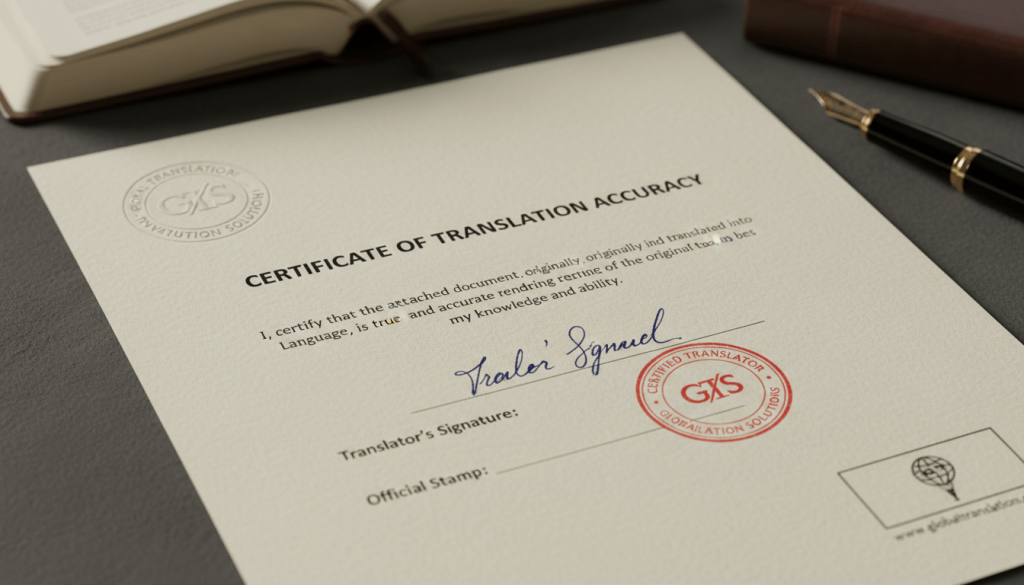
Many people ask how to know if a translator is certified, especially when comparing freelancers or online offers. Use this checklist:
Ask for a Sample Certification Statement
A genuine certified translation includes:
- A signed declaration of accuracy
- The translator’s full name
- Date and place of certification
- Contact details or professional identification
If a translator cannot explain their certification process clearly, that is a warning sign.
Verify Identity and Accountability
Certification only has value if the translator can be identified and contacted. Always confirm:
- A real business address or registered company
- Professional email (not free or anonymous accounts)
- Clear responsibility for the translation
Anonymous “certified translations” downloaded instantly online are often rejected.
Confirm Acceptance With the Receiving Authority
If in doubt, ask:
- “Will you accept a certified translation issued by a professional translator or agency?”
Most authorities care about accuracy and accountability, not about a specific stamp design.
Common Red Flags to Avoid
Be cautious if you encounter:
- Extremely low prices for “certified” work
- No explanation of certification at all
- Refusal to put certification details in writing
- Promises of universal acceptance without review
Certification is a professional liability. Serious translators do not treat it casually.
Certified Translator vs Notarised Translation
These are not the same.
A certified translation confirms linguistic accuracy.
A notarised translation adds a notary’s verification of the translator’s identity, not the translation quality.
Many documents only require certification. Notarisation is only needed when explicitly requested.
Why Professional Certification Matters More Than Ever
Authorities worldwide are increasingly strict about document verification. Incorrect or non-compliant translations can result in:
- Application delays
- Document rejection
- Additional costs for retranslation
- Legal complications
Choosing a properly certified translator from the start avoids all of this.
Why Clients Choose Transcribe Lingo
Clients rely on Transcribe Lingo because we provide:
- Professionally certified translations accepted by authorities
- Experienced in-house linguists, not anonymous freelancers
- Clear certification statements with every eligible translation
- Support across legal, immigration, academic, and business documents
From upload to delivery, every step is handled with precision, accountability, and care.
If your document needs to be right the first time, you are in safe hands.
Frequently Asked Questions
How do I find a certified translator for official documents?
Look for a professional agency or translator who provides signed certification statements and has experience with official submissions.
How can I tell if a translator is genuinely certified?
Ask for details of their certification process, professional credentials, and a sample certification statement.
Are certified translators licensed by the government?
In most countries, including the UK, certification is based on professional responsibility, not government licensing.
Is a certified translation always accepted?
If the certification meets the authority’s requirements and is issued by a qualified professional, acceptance is very high.
Do online instant certified translations work?
Many are rejected due to lack of accountability, improper certification, or unknown translators.
