
If you’re searching for how to get a certified translation birth certificate UK, you’re usually on a deadline: a visa application, passport process, citizenship route, university enrolment, marriage registration, or an overseas requirement from an embassy.
The good news is the process is straightforward once you know what “certified” actually means in the UK, what details must appear on the translation, and what commonly causes documents to be rejected.
This guide walks you through the exact steps, includes a practical checklist you can use before you submit, and shows you when you may need notarisation or an apostille on top of a certified translation.
If you want to skip straight to getting it done, you can upload your document for a quote here: Birth certificate translation services.
What is a “certified translation” in the UK
In the UK, a certified translation is a professional translation that comes with a signed certification statement confirming the translation is complete and accurate, alongside key identifying details (such as the date and the translator or agency’s contact details).
A certified translation is designed to be accountable: the receiving authority should be able to see who translated it, when, and how to contact them if needed.
Why birth certificates need extra care
Birth certificates often include details that must be reproduced precisely, such as:
- Full names (including diacritics/accents, multiple surnames, patronymics, etc.)
- Dates and places of birth
- Registration numbers and issuing authority details
- Stamps, seals, handwritten notes, marginal notes, and corrections
- Parent details (names, nationality, occupation, residence)
Small formatting or spelling inconsistencies can create big problems—especially if the birth certificate is used alongside passports, BRPs, marriage certificates, or court documents.
When do you need a certified translation of a birth certificate?
People typically need a certified translation of a birth certificate in the UK for:
- Immigration and visas (UK applications or applications abroad where English documents are required)
- British passport applications (especially after a change of status or where supporting documents are not in English)
- Citizenship and nationality applications
- Marriage and civil partnership processes (in the UK or overseas)
- Universities and professional registration
- Overseas authorities (e.g., dual citizenship, registering a child abroad, inheritance matters)
If your birth certificate is not in English (or Welsh for some UK contexts), a certified translation is commonly requested. When in doubt, check the receiving organisation’s document checklist or ask them directly.
Certified vs notarised vs apostilled: which one do you actually need?
This is where many people overspend—or worse, submit the wrong thing.
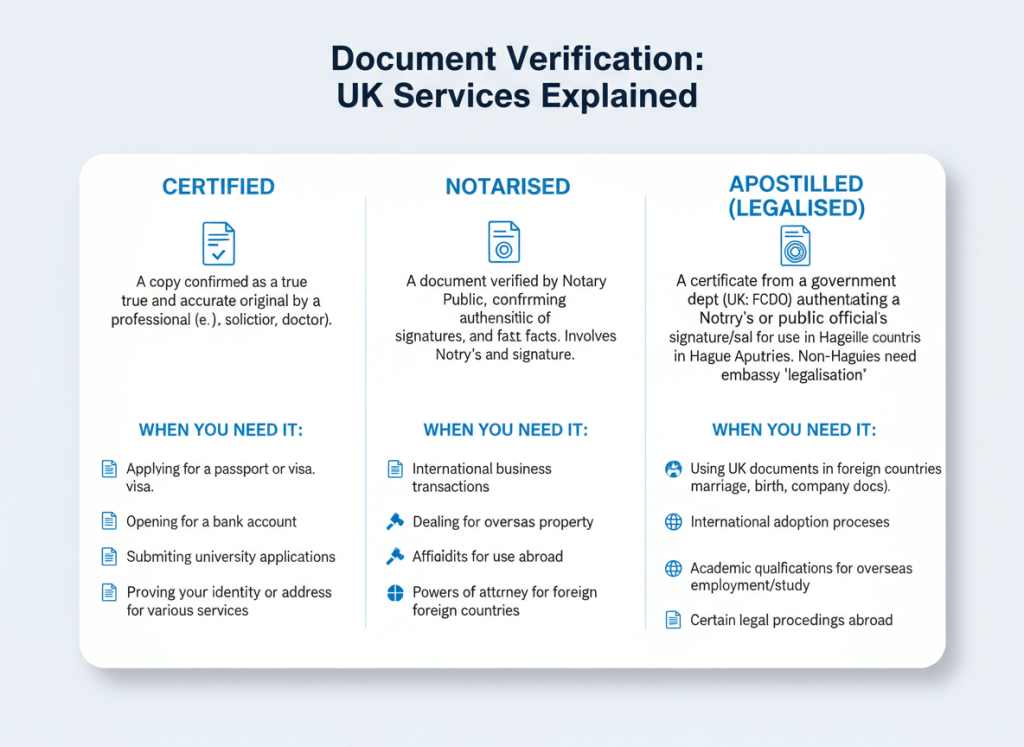
Certified translation
Most common for UK use.
You receive the translation plus a signed certification statement.
Notarised translation
You receive a certified translation and the signature on the certification is witnessed/attested by a notary (or sometimes a solicitor). This is often requested when the document will be used outside the UK, depending on the country and institution.
If you suspect you’ll need this, see: Notarised translation.
Apostille (legalisation)
An apostille is a form of legalisation used for international acceptance. In many cases, it applies to the notary’s signature, not the translation text itself. This is usually relevant if a foreign authority asks for legalisation.
If your submission is for another country and they mention “apostille”, “legalisation”, or “Hague Convention”, it’s a strong sign you may need this route.
For documents going overseas (or where requirements aren’t clear), you can start here: Legal document translation.
How to get a certified translation of a birth certificate in the UK (step-by-step)
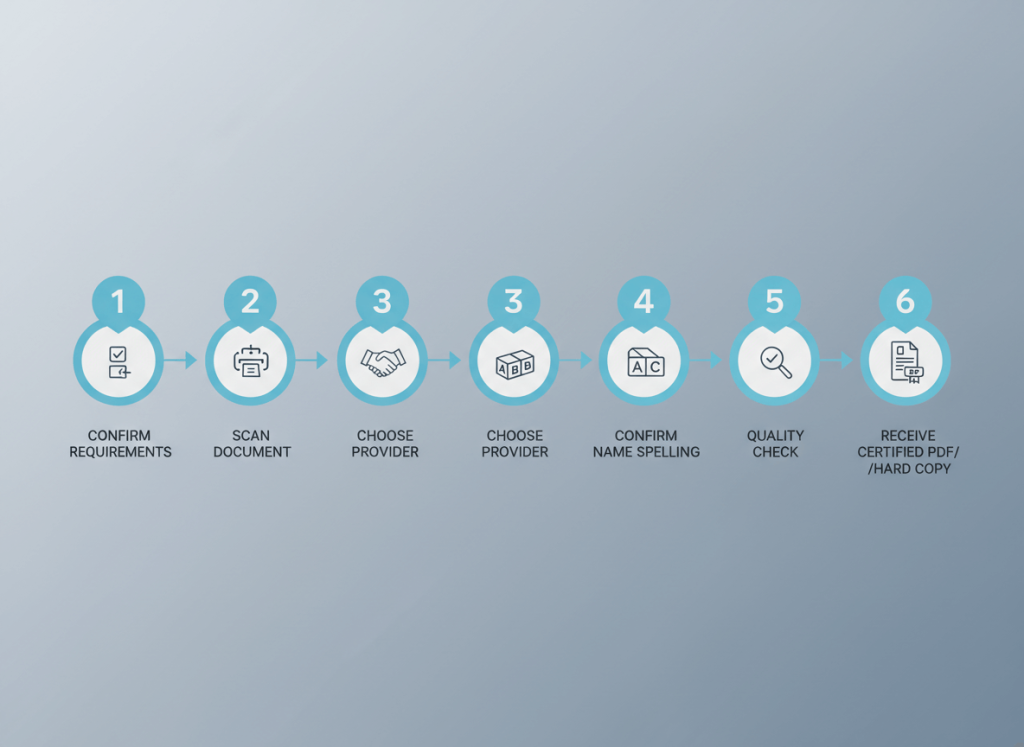
This section answers, directly, how to get a certified translation of birth certificate, including where to get it and what to send.
Step 1: Confirm what the receiving authority wants
Before paying for anything, answer these three questions:
- Which country and authority is this for? (UKVI, a university, a foreign embassy, a registrar, etc.)
- Do they accept digital copies (PDF), or do they require hard copies?
- Do they require certified only, or notarised/apostilled as well?
If the authority’s instructions are vague, ask them:
“Do you require a certified translation only, or a notarised/apostilled translation?”
That one question can save you both time and money.
Step 2: Prepare a clear scan or photo (most delays happen here)
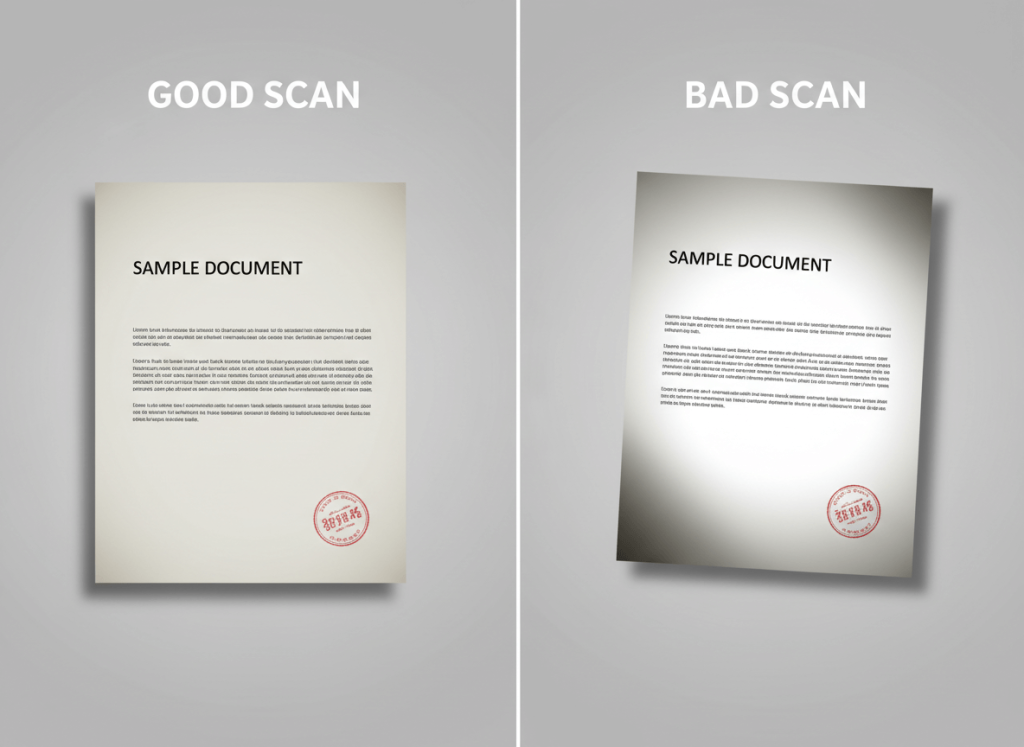
A certified translation is only as reliable as the document you provide.
Use this quick scan checklist:
- Photograph/scan the entire document, including borders
- Ensure all stamps/seals are visible
- Avoid glare/shadows; place the document on a flat surface
- Use high resolution (phone “document scan” mode works well)
- If there is writing on the back, scan both sides
- If the certificate is multi-page or has an annex, include everything
If your certificate is damaged or partially unreadable, say so upfront. A professional translator can advise whether you need a replacement copy first.
Step 3: Choose a provider who can certify properly
If you’re wondering where to get a certified translation of birth certificate in the UK, focus on capability over marketing claims.
A reliable provider should:
- Translate the full content, including stamps and notes (not “summarise”)
- Mirror the original layout where helpful (tables, headings, registry fields)
- Provide a certification statement that includes the required details
- Offer support if the receiving authority asks questions
If you need a specialist team used to formal documents, start here: Certified translation services.
Step 4: Tell the translator how names should appear (this prevents mismatches)
This is a simple step that prevents many rejections.
Provide:
- The spelling of names as shown on your passport (if different scripts are involved)
- Any preferred transliteration (if you already have it from official documents)
- Whether you want UK-style date formatting (usually day–month–year)
If your birth certificate uses a different name order than your passport (common in many countries), mention it.
Step 5: Approve how critical details are presented
A professional service will preserve what’s on the document without “correcting” it, but you should still check:
- Names and spelling (including accents)
- Dates
- Places
- Registration numbers
- Parent details
If something looks inconsistent across your documents, don’t guess—ask the receiving authority which document is the “master” reference.
Step 6: Receive your certified translation in the right format
Most people receive:
- A certified PDF (often accepted for online applications)
- Optional posted hard copies (useful for embassies or original-submission requests)
If you’re unsure what format to choose, request the option that gives you flexibility: digital first, with hard copies available if needed.
To start the process quickly: Upload your birth certificate for a quote.
What must be included in a UK certified translation?
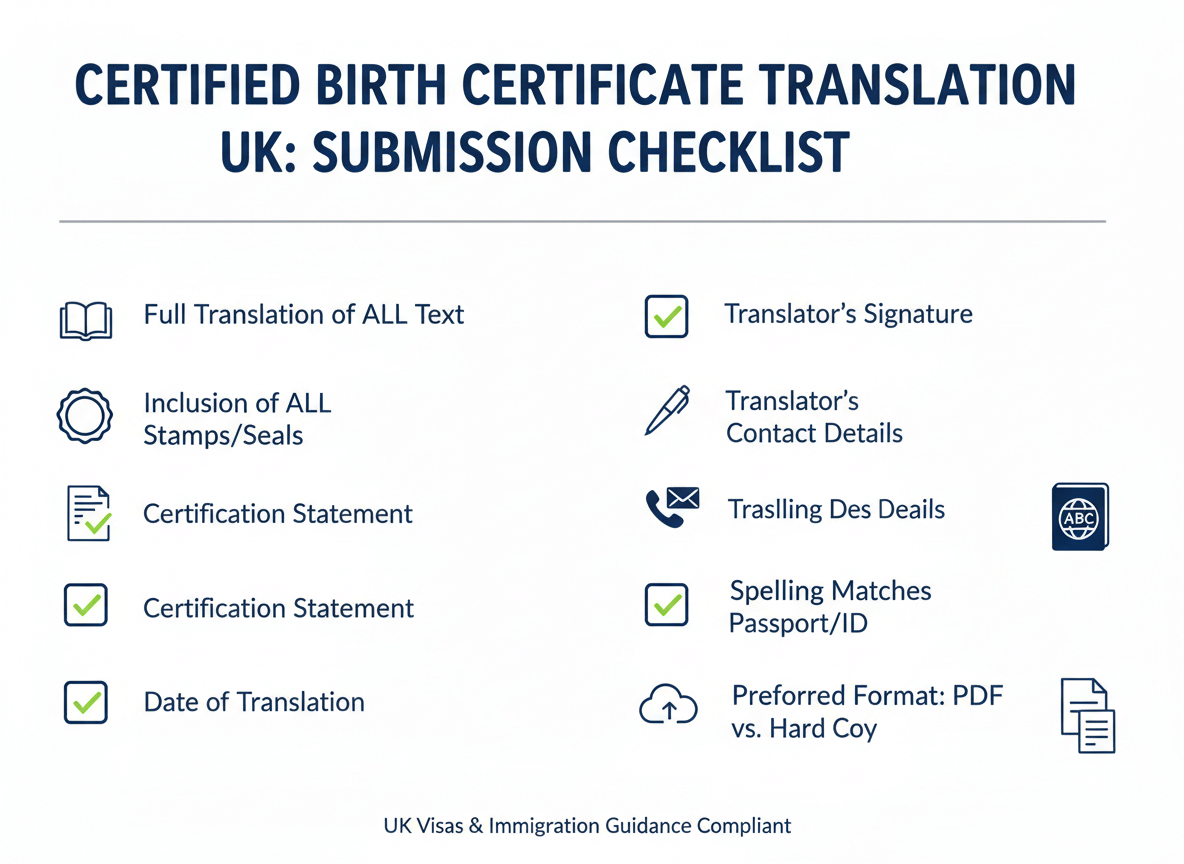
A certified translation typically includes:
- The translated document (complete, including stamps/notes)
- A certification statement confirming accuracy and completeness
- The date of translation
- The translator or agency name
- A signature
- Contact details (so it can be independently verified)
Example certification statement (UK-style)
Use this as a reference point (your provider may format it differently):
Certification
I certify that this is a true and accurate translation of the original document presented to me.
Translator/Agency: [Name]
Signature: [Signed]
Date: [DD Month YYYY]
Contact details: [Address / Email / Telephone]
Some institutions may also expect a stamp and/or a reference number.
Common reasons birth certificate translations get rejected
Even when people use a professional translator, rejections can still happen—usually for avoidable reasons:
- Missing certification details (no date, no contact details, no signature)
- Partial translation (stamps, marginal notes, or the back page not translated)
- Inconsistent spellings across documents (passport vs birth certificate)
- Poor scan quality (unreadable stamp, cut-off edges, glare)
- Wrong level of service (certified submitted where notarised/apostilled was required)
- DIY translations (often not accepted for official use)
A quick self-check before you submit
Ask yourself:
- Can the authority clearly see who translated it and how to contact them?
- Are all seals/stamps and annotations accounted for?
- Does the name spelling align with the rest of your application pack?
If the answer is “not sure”, fix it before you submit.
How long does it take to get a birth certificate translated?
Turnaround depends on:
- Language pair and complexity
- The condition/readability of the document
- Whether you need notarisation or legalisation
- Whether you need posted originals/hard copies
If you’re working to a deadline, the best approach is to share your document early and state your submission date so the translator can recommend the safest option.
How much does a certified birth certificate translation cost in the UK?
Pricing is usually driven by:
- Length and format (simple certificate vs long-form registry record)
- Language pair and specialist requirements
- Urgency (standard vs express)
- Add-ons like notarisation/apostille and delivery
If you want a fast, accurate quote, the simplest route is to upload a scan and confirm:
- target authority/country
- deadline
- whether you need digital only or hard copies
You can do that here: Get your birth certificate translation.
Where to get a certified translation of a birth certificate
You have three common options:
- A specialist translation agency that provides certified translations for official use
- A qualified independent translator who can certify the translation and provide full contact details
- A legalisation/document handling provider (useful if you need notarisation/apostille bundled)
If you’re juggling requirements (certified + notarised + apostille), it’s usually easier and safer to use a provider who can manage the whole chain. If that’s your situation, start here: Legal document translation.
Mini case examples: what “going wrong” looks like (and how to prevent it)
Case 1: “Everything was translated, but it still got rejected.”
The certification statement had no contact details. Adding a compliant certification page resolved it.
Case 2: “The spelling didn’t match my passport.”
The birth certificate used a different transliteration. Aligning the spelling to passport usage (while preserving the original) prevented a mismatch across the application pack.
Case 3: “The authority asked for legalisation.”
The translation was fine, but the destination country required an apostille on the notarised certification. Handling the notarisation + apostille together solved it.
A practical checklist you can copy and use today
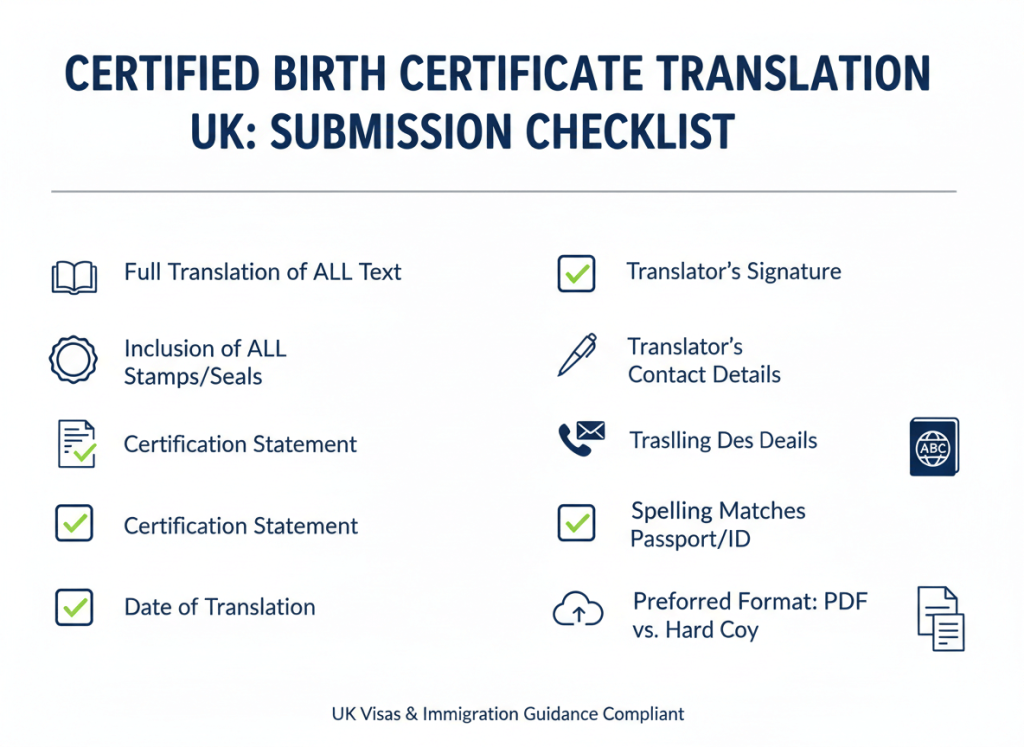
Before you submit your certified translation, confirm:
- Full document translated (including stamps/seals/notes)
- Certification statement included
- Date of translation shown
- Translator/agency name shown
- Signature included
- Contact details included
- Names match passport spelling (where relevant)
- Format is acceptable to the receiving authority (PDF vs hard copy)
- Notarisation/apostille included if required
If you want someone to sanity-check what you need before you order, use the contact form here: Contact Transcribe Lingo.
FAQs
How do I get a certified translation of birth certificate in the UK?
Get a clear scan, confirm whether you need certified only or notarised/apostilled, then use a professional translator or agency to produce the full translation with a signed certification statement and contact details.
Where can I get a certified translation of a birth certificate?
You can use a specialist translation agency, a qualified independent translator who can certify the translation, or a provider who can also arrange notarisation/apostille if your destination country requires it.
Can I translate my own birth certificate and have it certified?
For official purposes, most authorities expect an independent translator or agency to certify the translation. If you’re unsure, check the receiving authority’s rules before you submit.
What should a certified translation include in the UK?
It should include the full translation plus a signed statement confirming it is accurate, dated, and showing the translator/agency’s name and contact details.
Do I need notarisation for a birth certificate translation?
Not always. Many UK uses only require certification. Notarisation is more common when the translation is for overseas authorities or when an embassy specifically requests it.
How long does a certified birth certificate translation take?
It depends on language, urgency, and whether extra steps like notarisation or legalisation are needed. Short documents can often be handled quickly once a clear scan is provided.
