
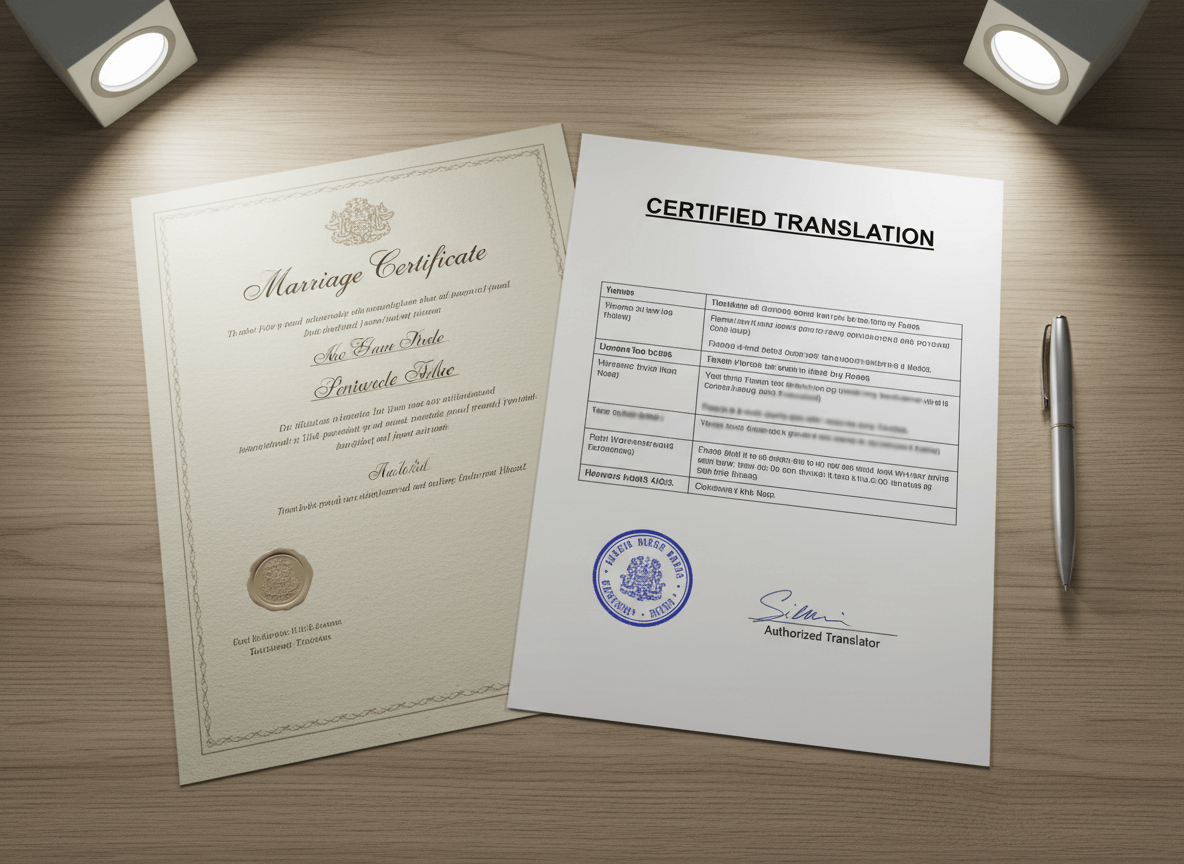
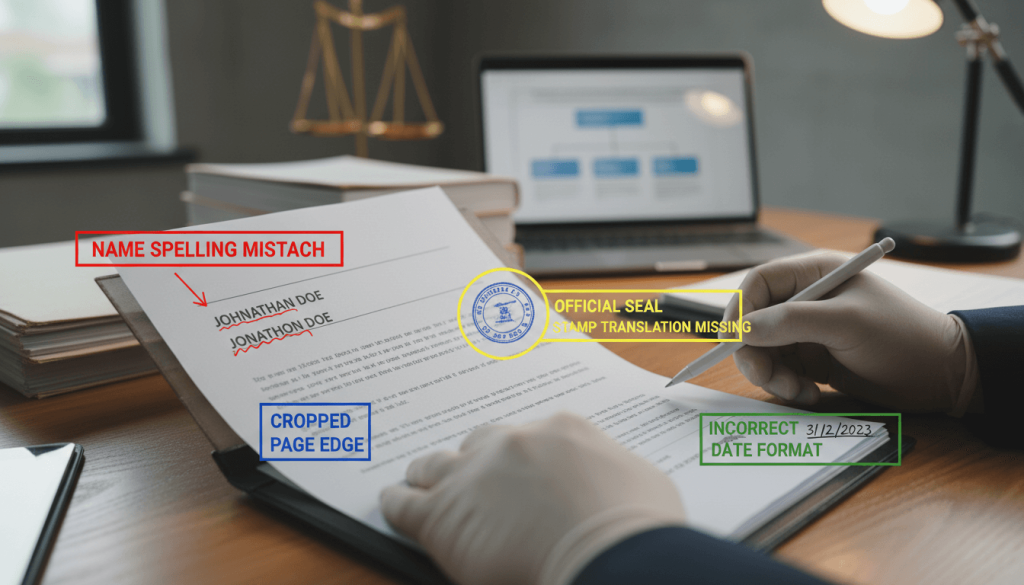
If you’re wondering how to get a certified translation of a marriage certificate, you’re usually dealing with something high-stakes: a visa or immigration application, a passport update, a spouse sponsorship, a court matter, or a bank/registry request. In all of those scenarios, “close enough” doesn’t cut it—small mistakes (a name spelling, a stamp omitted, a date format flipped) can trigger delays, re-requests, or outright rejection.
This guide walks you through the process end-to-end, with a practical checklist, real-world pitfalls, and the quickest path to getting a translation that’s accepted first time.
Need it urgently? You can upload your marriage certificate and get a fixed quote here:
https://transcribelingo.com/certified-translation-services/
What “Certified Translation” Means for a Marriage Certificate
A certified translation is a human translation of your document that comes with a formal certification confirming it’s a complete and accurate translation of the original. That certification typically includes key identifiers (such as the translator/agency name, signature, date, and contact details) so the receiving authority can verify it if needed.
What trips people up is that “certified” doesn’t mean the same thing everywhere:
- In some countries, a certified translation from a professional translation company is enough.
- In others, you may also need notarisation (a notary witnesses the certification signature).
- For cross-border use, you might need an apostille/legalisation after notarisation.
If you’re not sure which level you need, the safest move is to send the receiving body’s instructions (or a screenshot) to your translator before the job starts.
If you suspect notarisation or apostille might apply, use:
https://transcribelingo.com/notarized-translation/
Start Here: Identify Where You’ll Submit the Translation
Before you pay for anything, answer this one question:
Where will you submit the translated marriage certificate?
Examples:
- UK Home Office / UKVI (visas, settlement, citizenship)
- USCIS (U.S. immigration benefits)
- IRCC (Canada)
- EU national registries or courts
- A consulate/embassy
- A bank, university, or solicitor
Why it matters: the destination determines:
- Whether you need certification only vs notarisation/apostille
- The language variant (UK vs US spelling conventions, date formats)
- Whether you must include a translation of stamps/seals/signatures
- Whether the authority expects a “translation package” (translation + original + certification, sometimes as a single PDF)
Step-by-Step: How to Get a Certified Translation of a Marriage Certificate
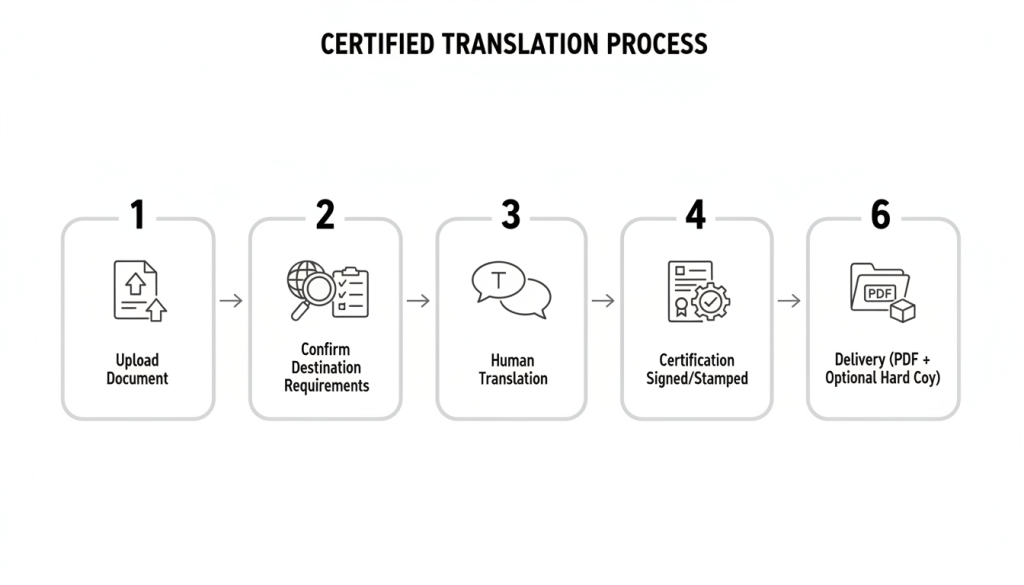
1) Get the best possible copy of your marriage certificate
You don’t always need the physical original to start. In most cases, a clear scan or high-resolution photo is enough.
Use this quick quality check:
- All text is sharp and readable (no blur, glare, shadows)
- The full page is visible (no cropped edges)
- Stamps, seals, marginal notes, and signatures are legible
- Both front and back are included (if there’s anything printed or stamped)
Tip: If your certificate has embossed seals or faint stamps, take two photos at different angles so the impression shows.
2) Tell your translator the destination and deadline
Send:
- The destination authority (e.g., UKVI, USCIS, IRCC, embassy name)
- Your deadline (including time zone)
- Whether you need digital-only or a posted hard copy
If you need a hard copy urgently, ask about courier/tracked shipping before you confirm.
3) Choose a provider who actually specialises in official documents
A marriage certificate is not the place for:
- Machine translation
- “My friend is bilingual”
- A general freelancer without certification experience
A reliable provider should offer:
- Specialist linguists familiar with civil status documents
- A defined QA process (not just “translated and sent”)
- A certification that includes the details authorities usually require
- Clear formatting that mirrors the original certificate
- Confidential handling of personal data
For legal-grade handling (court/solicitor/immigration bundles), this page is helpful:
https://transcribelingo.com/legal-document-translation/
4) Confirm how names and places will be rendered (this is where rejections happen)
Marriage certificates often include names in a local script, multiple surnames, patronymics, or regional naming customs.
To avoid mismatches:
- Provide the spelling exactly as shown on passports/IDs (for both spouses)
- Flag any preferred transliteration (if applicable)
- Confirm how diacritics will be handled (e.g., Ł, Ş, Ñ)
- Ask the translator to keep formatting consistent with the original document
5) Review the draft like an auditor (not like a reader)
Before certification is finalised, check these fields carefully:
- Full legal names (including middle names)
- Date of marriage (and date of issue, if different)
- Place of marriage
- Registration numbers / certificate numbers
- Official titles and issuing authority names
- Notes in margins, endorsements, and stamps
- Any handwritten additions
If anything is wrong, fix it before certification is signed and stamped.
6) Receive your certified translation in the right format for submission
Most submissions work best as:
- A single PDF including the translation + certification page
- The original scan attached separately (or combined, depending on instructions)
Ask for:
- A digital certified copy (PDF) you can upload instantly
- A posted hard copy if required by the receiving body
The “Acceptance Ladder”: What Makes a Marriage Certificate Translation Get Approved
Think of acceptance as three layers:
Layer 1 — Document clarity
If the scan is unreadable, the translation can’t be verified. That’s the fastest route to a re-request.
Layer 2 — Translation completeness
Authorities expect everything translated:
- Headings, printed fields, and typed entries
- Stamps, seals, signatures (often labelled)
- Notes, endorsements, and marginal entries
Layer 3 — Certification correctness
This is where many DIY attempts fail. A proper certification should make the translation verifiable and credible.
Certified vs Notarised vs Apostille: Which One Do You Need?
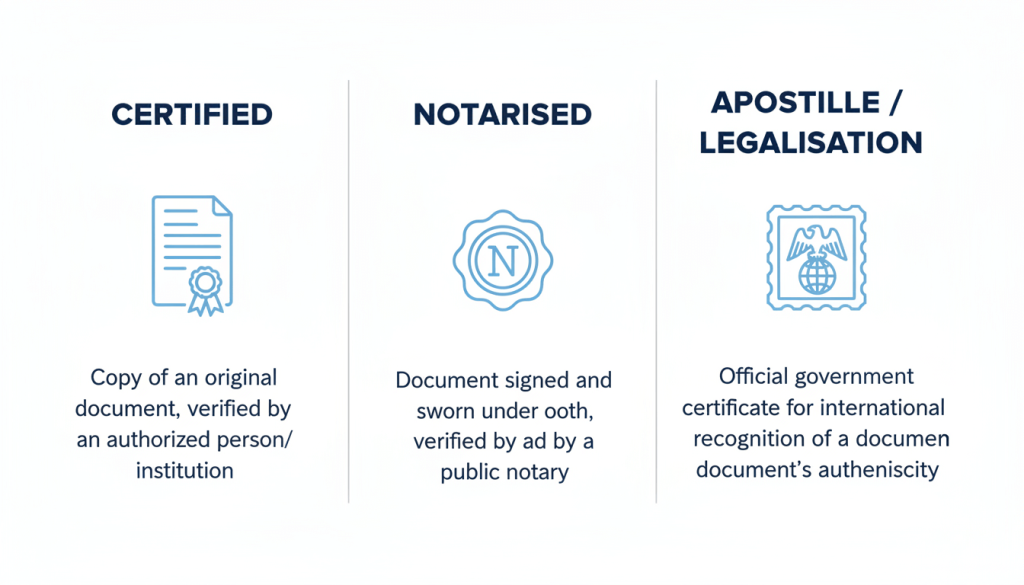
Certified translation
Best for many administrative uses (immigration, banking, university, solicitor submissions—depending on the authority). You receive:
- The translation
- A signed/stamped certification of accuracy
Start here for most cases:
https://transcribelingo.com/certified-translation-services/
Notarised translation
A notary witnesses the signing of the certification (or attests it), which some embassies and overseas authorities require.
If the instruction contains words like “notary public”, “notarised”, “sworn before”, or “affidavit”, ask for notarisation:
https://transcribelingo.com/notarized-translation/
Apostille/legalisation
Used when a foreign authority needs proof that the notary’s signature is genuine (common for cross-border civil matters). This often comes after notarisation.
If you’re unsure, send the requirement text to your provider and ask for the minimum compliant route.
Common Reasons Marriage Certificate Translations Get Rejected
Here are the repeat offenders we see across immigration and legal workflows:
- Names don’t match passports (extra middle name, missing surname, transliteration mismatch)
- Stamps/seals not translated or not labelled clearly
- Back page ignored (many certificates have endorsements on reverse)
- Date confusion (DD/MM vs MM/DD, or issue date vs marriage date)
- Fields rearranged so the translation no longer mirrors the source
- Certification missing key details (signature/date/contact information)
- Illegible source scan leading to guesswork
- Unauthorised self-translation (often refused for conflict-of-interest reasons)
What a Strong Certification Usually Includes (Sample Wording)
Below is an example of the type of certification statement authorities commonly expect. Your final version should match the destination requirements.
Translator’s Certification
I certify that I am competent to translate from [Source Language] into English and that the attached translation of the marriage certificate is a true and accurate translation of the original document.Name: [Translator Name]
Signature: ____________________
Date: [DD Month YYYY]
Contact details: [Email / Phone / Address or Company Details]
If your destination needs notarisation, the notary will typically witness/attest the signature on this certification.
Turnaround Times: What’s Realistic (and What to Ask For)
For a standard marriage certificate (1–2 pages), typical delivery options often look like:
- Same-day / 24-hour (urgent submissions)
- 24–48 hours (most common)
- 1–3 working days (if the document is complex, handwritten, or requires extra checks)
- Longer if notarisation and/or apostille is required
Ask for two timelines:
- Digital certified PDF delivery time
- Hard copy delivery time (if needed), including shipping method
Cost Drivers (So You Know What You’re Paying For)
Prices vary by language and complexity. The biggest drivers are:
- Language pair rarity
- Amount of handwritten content
- Multiple stamps/seals and marginal notes
- Layout recreation (tables, multi-column certificates, government templates)
- Certification + optional notarisation/apostille coordination
- Urgency
If you want transparent pricing, you can access Transcribe Lingo’s pricing page here:
https://transcribelingo.com/price-rate/
A Practical Checklist Before You Upload Your Marriage Certificate
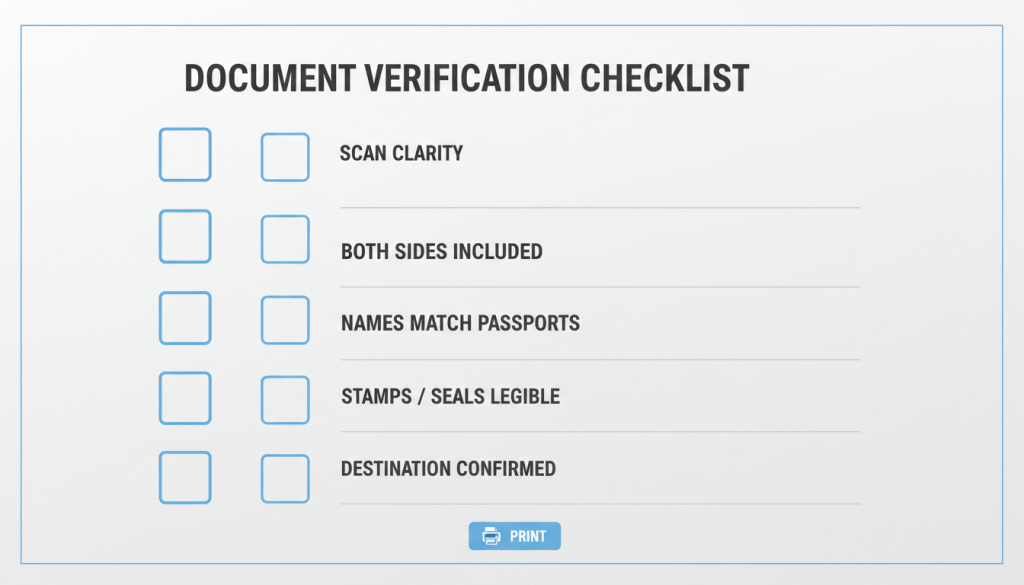
Use this as a pre-submission checklist to avoid delays:
- ✅ You have a clear scan/photo (no blur, no glare)
- ✅ You included both sides (if applicable)
- ✅ You know where you’ll submit it (UKVI/USCIS/IRCC/embassy/court)
- ✅ You know your deadline and required format (PDF / hard copy)
- ✅ You have passport spellings for both spouses ready
- ✅ You know whether notarisation/apostille is required
- ✅ You’ve flagged any stamps, seals, handwritten notes, or missing text
Ready to proceed? Upload your file here:
https://transcribelingo.com/certified-translation-services/
Why Clients Use Transcribe Lingo for Marriage Certificate Translations
When a marriage certificate translation is part of an immigration or legal submission, you want two things: accuracy and acceptance.
Transcribe Lingo supports that with:
- Specialist linguists for official and legal documents
- Dual-check workflows (translation + review)
- Secure handling of personal documents
- Fast turnaround options where feasible
- Clear certification designed for official verification
If you have instructions from the receiving authority, include them with your upload so we can match the exact compliance level.
Start your marriage certificate translation now:
https://transcribelingo.com/certified-translation-services/
FAQs
Can I translate my own marriage certificate and certify it?
In most official scenarios, self-translation is risky and often refused due to credibility and conflict-of-interest concerns. A professional third-party translation with proper certification is the safest route.
Do I need notarisation for a certified translation of a marriage certificate?
Not always. Many authorities accept certified translations without notarisation, but some embassies and overseas registries require a notarised certification (and sometimes an apostille after that). If your instructions mention a notary, choose notarised translation.
How long does a certified marriage certificate translation take?
For a standard certificate, digital delivery is commonly available within 24–48 hours, with faster options sometimes available. Notarisation and apostille add extra time.
Will the translation include stamps and seals?
It should. For official use, stamps, seals, signatures, and endorsements should be translated or clearly labelled so the receiving authority can verify the document.
What if my marriage certificate is multilingual already?
If your certificate already contains the target language (e.g., English) and the receiving authority accepts it as-is, you may not need translation. If the authority still requests a certified translation, it’s usually because they require a certified statement and verifiable formatting.
What format will I receive?
Most clients receive a certified PDF suitable for online submission, with optional posted hard copies where required.
